
Electric scooters have become a major talking point. Since they began multiplying across cities, this micromobility option has run into several obstacles - with safety among the most pressing.
Those concerns drew even more attention after Paris banned shared e-scooters in September last year. Now it is Valencia’s turn to follow the French capital’s lead, although the Spanish city is taking a different approach.
Portable dynamometers for “hunting” electric scooters
Valencia has seen a marked rise in collisions involving electric scooters. According to the local police, there were more than 900 accidents involving these vehicles in 2023, compared with 478 recorded in 2018.
Why modified electric scooters are part of the problem
A significant factor is the modification of electric scooters, which enables riders to bypass the electronic limit of 25 km/h - the maximum speed allowed for this category of vehicle.
How Valencia Police test electric scooters on the spot
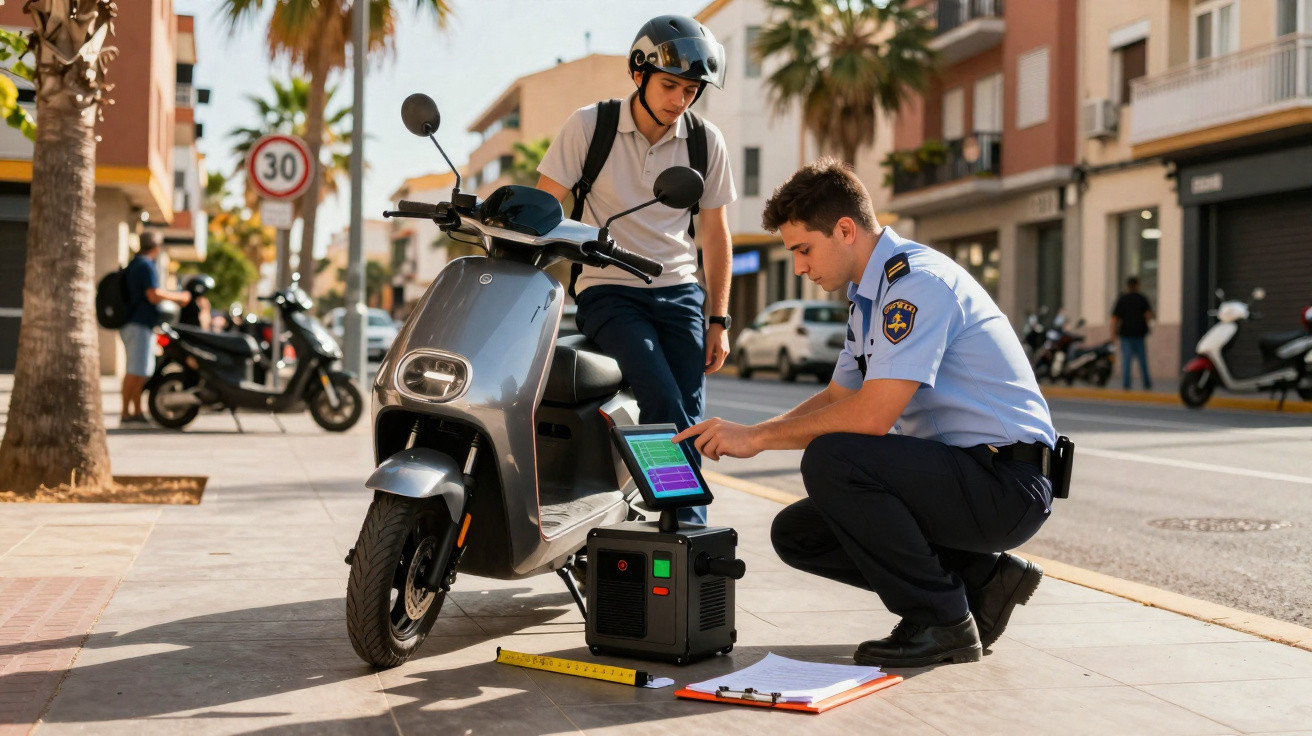
To tackle the growing number of tampered scooters, Valencia’s police have equipped themselves with portable dynamometer benches. This innovative “scooter hunter”, developed in collaboration with the Polytechnic University of Valencia, lets officers quickly check the power output and top speed a scooter can reach.
What happens during a roadside check
The process is straightforward: an officer places the scooter on the dynamometer bench and presses the throttle. If it goes beyond 25 km/h, the rider may have their scooter immobilised and face a €500 fine.
Beyond penalising illegal modifications, the Spanish authorities also hope to raise public awareness of the associated risks, while setting an example that other Spanish cities can follow.
In Portugal
In Portugal, the law states that electric scooters are only legal if they have no more than 0.25 kW of power and cannot exceed a maximum speed of 25 km/h. Even so, Lisbon City Council reduced the maximum speed to 20 km/h at the start of 2021.
At the time, Lisbon’s mayor, Carlos Moedas, said he would have liked to go further and set the limit even lower, arguing that “excessive speed” on these vehicles has “created a safety problem”.
According to DECO Proteste, in 2023 there were 3239 accidents and 26 deaths involving electric scooters in Portugal.
Source: Las Provincias




Comments
No comments yet. Be the first to comment!
Leave a Comment