
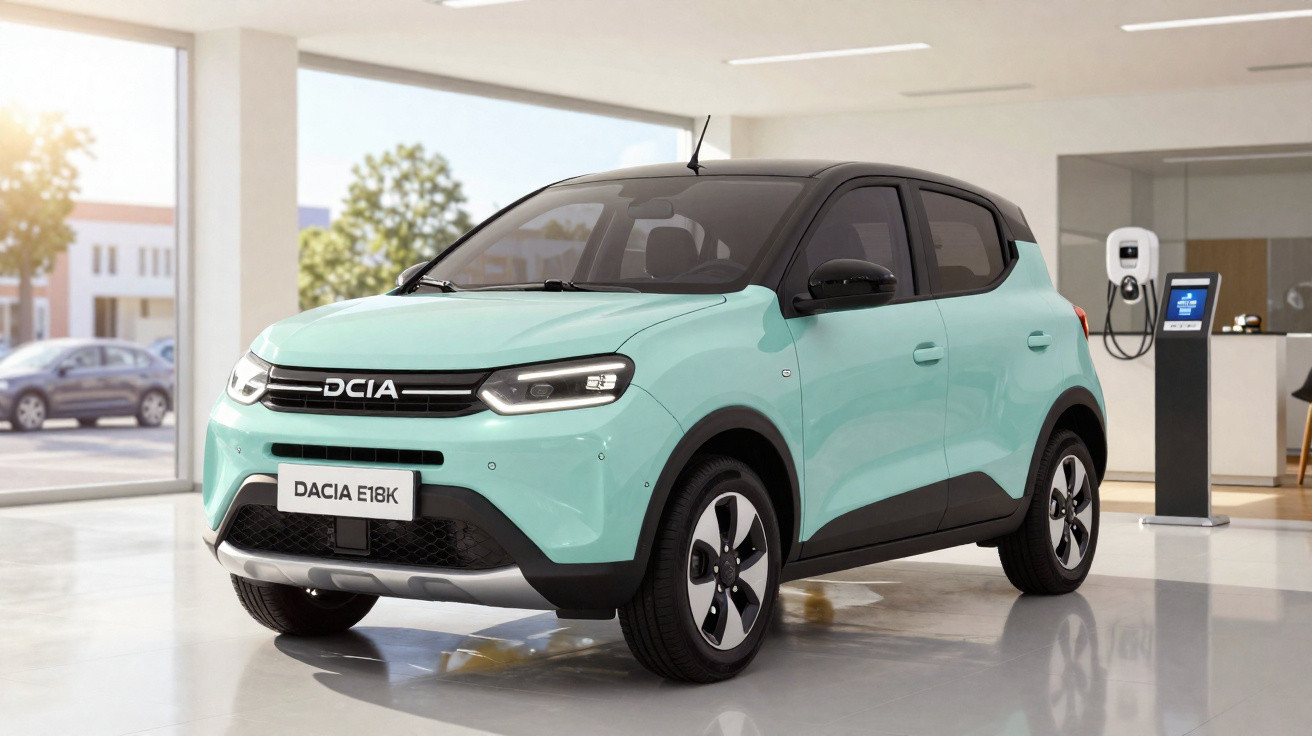
Dacia is resetting its direction towards 2030 and moving far more assertively into the electric car space. The Romanian brand-so far best known for simple, tough petrol and diesel models-has announced four new EVs and is targeting a starting price well below what buyers have come to expect from the market.
Dacia steps into the EV spotlight with the futuREady plan
The Renault Group has unveiled its strategy programme, “futuREady”. Within that framework, Dacia has been given a clearly defined job: electric mobility for people who do not want to pay a premium-brand surcharge. By 2030, the marque is expected to achieve two thirds of its sales with electric power.
Four new Dacia EVs by 2030, a starting price below €18,000 and the aim of delivering the cheapest offer in the segment.
Up to now, Dacia has offered only one fully electric model: the Spring. It is regarded as one of Europe’s most affordable electric cars, but it is built in China and therefore no longer meets the requirements for France’s environmental bonus. Even so, it continues to sell reasonably well-especially with commuters who travel in and around cities.
With this new approach, Dacia is shifting away from one-off EV niche models and towards a genuine electric portfolio. Four vehicles have been confirmed; the manufacturer is still revealing specifications in small steps, but the direction is unmistakable: European production, more tightly costed engineering, and the widest possible eligibility for incentives.
New city EV under €18,000
The first element of the new electric push is a compact city hatchback/saloon derived from the next-generation Renault Twingo. The car is intended to translate classic Dacia values into an electric format: no frills, durable hardware, and a clear price point.
The new Twingo-based Dacia EV is set to be built in Europe and start below €18,000-before incentives.
Because it will be produced in Europe, the model should again qualify for national incentive schemes, such as the environmental bonus in France. With support applied, the effective purchase price could drop well below €15,000. That would bring a fully fledged electric car close to the price territory of many small combustion-engined cars.
Why the production location has such a big impact on price
With electric cars, it is no longer just about battery costs. Where a vehicle is made also influences the final price:
- Manufacturing in Europe protects access to incentive programmes.
- Shorter supply chains reduce transport costs and risk.
- Lower exposure to import tariffs or political tensions.
- Better predictability for fleet buyers and leasing providers.
Dacia is using these levers consistently to push the numbers down. The brand avoids expensive equipment excess, relies on proven Renault technology, and spreads costs through high volumes.
Four Dacia EVs by 2030: what we already know
The company is still keeping many details under wraps, but a few points can already be assessed. The overview below reflects the current picture:
| Model / plan | Status | Planned entry price | Place of manufacture | Key points |
|---|---|---|---|---|
| Twingo-based city EV | Confirmed | Under €18,000 | Europe | Potential for environmental bonus, urban focus |
| Dacia Spring (current generation) | Already on sale | Low, but without bonus | China | No French eco bonus, proven city car |
| Sandero as a 100% electric version | Widely expected | Not yet disclosed | Not yet disclosed | Likely LFP battery for cost advantages |
For the time being, the Dacia Duster remains outside this EV wave. For the brand’s successful SUV, the emphasis is more on hybrid or LPG options to hold the price point and to avoid range anxiety for long-distance drivers.
Dacia stays Dacia: price before prestige
Despite the pivot to electric mobility, Dacia does not want to tamper with its basic formula. According to group communications, the goal remains to offer “the most competitive proposition in terms of price, costs and customer benefit”. In plain terms: less chrome, more spreadsheet.
Dacia is electrifying its range without becoming a lifestyle brand-function comes before image.
That also means deliberate omissions: less screen overload in the cabin in favour of solid physical buttons; no overpowered flagship versions, but enough range for everyday use and commuting. This philosophy particularly appeals to people who treat a car as a tool rather than a status symbol.
LFP batteries as the key to cost control
In discussions around the expected electric Sandero, one technical term comes up repeatedly: LFP batteries. LFP stands for lithium iron phosphate. This chemistry has slightly lower energy density than classic NMC packs, but it brings several advantages for brands such as Dacia:
- Lower manufacturing costs per kWh.
- High cycle stability, meaning a long service life.
- Reduced risk of thermal issues.
- Ideal for moderate ranges between town and the surrounding area.
For long-distance machines claiming 600 kilometres of WLTP range, LFP cells are less attractive. For affordable everyday EVs with real-world 250 to 350 kilometres, however, they fit the brief extremely well.
What does the €18,000 price mean for buyers in Germany, Austria and Switzerland?
Anyone in Germany, Austria or Switzerland considering an electric car quickly runs into a familiar issue: many EVs start well beyond €30,000. Even with incentives, the barrier to entry remains high.
An electric car well under €20,000 could noticeably shift the market for commuters, second cars and car-sharing providers.
If you add incentives and dealer discounts, there are plausible scenarios where the new Dacia EV competes on price with used cars. A conceivable example for Germany-if support mechanisms were to apply again-could look like this:
- List price: €17,900
- Possible incentive (future models): e.g. €3,000–4,000
- Effective entry point: close to €14,000 or below
That would place a new car with warranty and low running costs into the same bracket as well-equipped small combustion cars. For many households with short daily driving patterns, the calculation changes significantly.
Opportunities and risks in Dacia’s strategy
The plan to make two thirds of sales electric by 2030 is ambitious, but not unrealistic. Several factors support it:
- Tighter EU CO₂ limits will force a shift anyway.
- Technology costs are falling, particularly for batteries and electric drivetrains.
- Dacia’s audience pays close attention to total cost of ownership.
There are still risks. If charging infrastructure develops too slowly, adoption could stall. Higher raw-material prices or geopolitical tensions can make batteries more expensive. And a price war with Chinese manufacturers could squeeze margins.
Dacia is trying to deal with these uncertainties through a simple principle: as little expensive technology as possible, as much usefulness as necessary. No high-end infotainment, but solid connectivity with smartphone integration. No gigantic battery, but charging capability that suits everyday driving patterns.
How this could change day-to-day driving
For people commuting 30 to 60 kilometres a day, an electric Dacia would mainly change two things: lower ongoing costs and a different refuelling routine. Instead of visiting a fuel station once a week, you plug in every few days at a home wallbox or a public charging point.
Especially in rural areas, inexpensive EVs with moderate range can be appealing if employers’ car parks or local councils provide straightforward AC charging points. Then outright record range matters less than a sensible overall price and uncomplicated daily use.
Another factor is resale. Budget EVs could be in high demand on the used market because they offer families a low-cost entry point. The expected longevity of LFP batteries should also help residual values avoid collapsing.
Why Dacia may strike a chord with many buyers
While other brands try to sell electric cars as high-tech gadgets with an endless stream of new features, Dacia is leaning on a simple promise: keep you mobile without draining your bank account. That grounded approach could give the marque an advantage in the electric era.
For anyone who has felt overwhelmed by long spec sheets, tech-heavy dashboards and confusing incentive rules, the new Dacia EVs may offer a clearer option: a car that cannot do everything, but reliably does what matters-and feels less painful when you look at your finances.



Comments
No comments yet. Be the first to comment!
Leave a Comment