
Short little runs - barely five or six minutes at a time. The sort of “quick drive” that, in your mind, doesn’t quite register as proper driving.
A couple of traffic lights, some stop–start crawling, then one impatience-driven burst to get past that sluggish van. You look at the fuel gauge and mutter because it seems to have dipped again, despite feeling as though you’ve hardly gone beyond your own streets.
On paper, these micro-trips look innocent. In practice, they quietly drain your tank - and the detail that makes the difference is so small it’s easy to overlook.
The hidden cost of every short drive
The most fuel-hungry part of any journey is the opening few minutes. The engine is still cold, the oil hasn’t thinned properly, and the tyres aren’t yet rolling as freely as they will later. Pressing the accelerator in that warm-up phase costs more fuel than making the same demand 15 minutes later on the motorway.
Most drivers don’t clock what’s happening. You simply notice the estimated range falling faster than seems reasonable, then blame “today’s fuel prices” or “city traffic”. The more awkward truth is this: what you do in the first 500 metres can massively affect consumption.
Short journeys amplify every sloppy habit. A hard pull-away, braking late, a quick surge to squeeze into a gap - on a long trip, those spikes get smoothed out. On a four-minute dash to the shops, those spikes are the trip.
On a chilly morning in Leeds, we spoke with Tom, who logs every fill-up and trip in a gloriously nerdy spreadsheet. He assumed his 2-mile (3.2 km) commute was too short to make any real difference. A month of tracking proved otherwise: those “tiny hops” were burning almost as much fuel as a far longer suburban run.
He altered a single thing - how he used his right foot in the first 30 seconds. Same route, same car, same traffic, just a calmer launch. Within three weeks, his average fuel use on that commute had fallen by a bit over 10%, backed up by pump receipts rather than optimism.
And it’s not just Tom. Fleet managers teach this quietly because it saves thousands of pounds across a year. Hypermilers online swear by it. Energy agencies mention it in eco-driving guidance, although it often gets buried under vague, one-size-fits-all tips.
Once you spot the pattern, it’s obvious: a cold engine running rich plus heavy acceleration equals needless burn. Repeat that across every school run, takeaway dash and gym visit, and the pain at the pump suddenly has a clear cause - and a switch you can actually flick.
The subtle adjustment: how you leave your street
The tweak itself is almost dull in its simplicity: accelerate smoothly and gently for the first 30 to 60 seconds of the journey. Not crawling - just a steady, progressive build so the engine can wake up naturally instead of being yanked into effort.
Think of it as “half the impatience, same destination”. Pull away, gather speed over a few seconds, change up early if you drive a manual, or keep light, even pressure if you’re in an automatic. The aim is to reach your street’s usual pace without any sudden shove.
Doing this keeps the revs down while the engine is still running rich. Lower revs mean less waste. On a long run, that early inefficiency is a small slice of the total. On a short hop, the first minute might make up 30–40% of the entire drive - which is why this tiny change can have an outsized impact.
Where people tend to trip up is the “I’m late” moment. You slam the door, fire the engine up, see a gap in traffic and stamp on the accelerator. It feels efficient because you’re “moving quickly”. On your engine’s internal fuel map, it’s the exact opposite.
On a wet Tuesday in Manchester, a driving instructor ran two near-identical trips with us to the same corner shop: same car, same distance. First run: a brisk pull-away, a sharp surge up to 48 km/h (30 mph), then normal braking. Second run: a softer start, more rolling, earlier anticipation of lights. The trip computer showed the gentler run used nearly 12% less fuel.
Now stretch that across a year of errands. That’s the real surprise: your biggest saving often isn’t the long summer holiday drive - it’s the everyday shuffle to the supermarket, the nursery or the takeaway. The “it’s only a quick one” journeys that actually shape your fuel bill.
The reasoning is blunt. On a short trip, the engine barely reaches its most efficient temperature. While it’s still warming up, it runs richer. Add aggressive acceleration and you’re demanding maximum work at the moment the car is least ready. Smooth out those first few metres and you stop pouring fuel into a cold, inefficient system.
Turning smoother starts into a daily habit
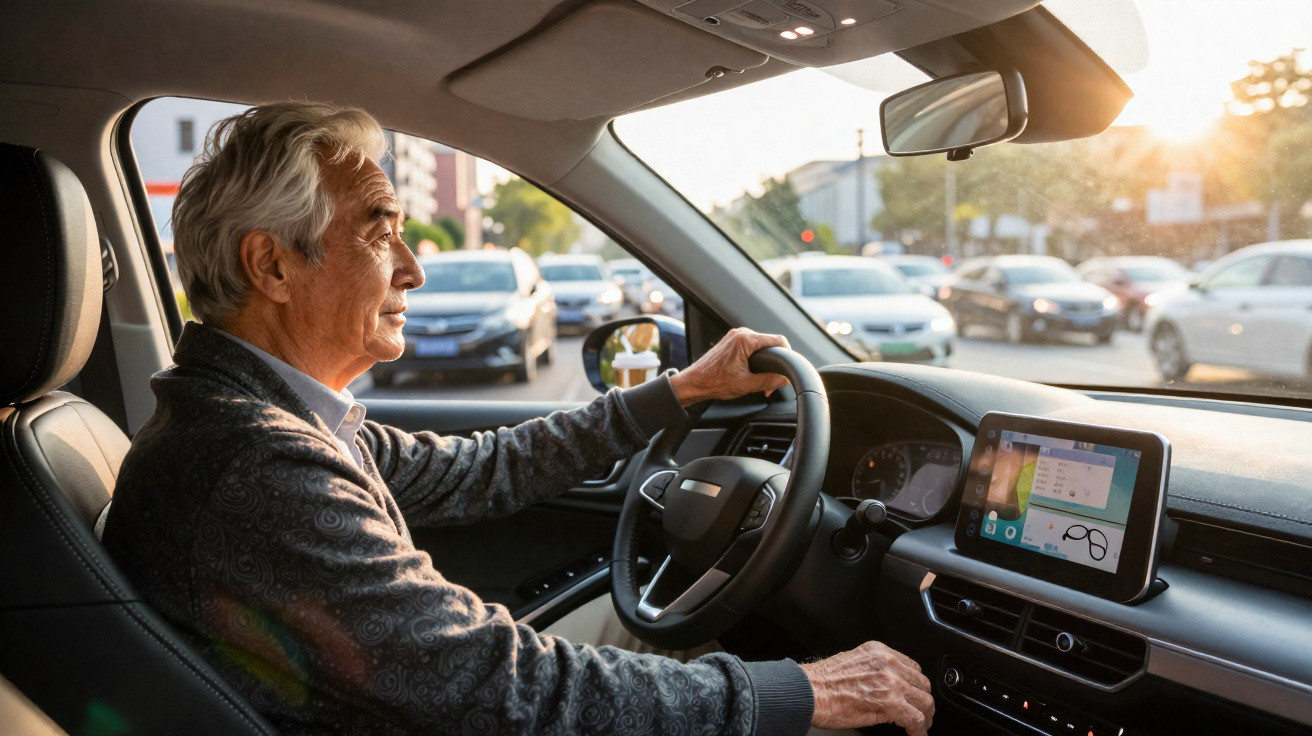
The simplest approach is to deliberately take the pace down for your first minute. When you start the car, give it a couple of seconds to settle, then pull away as though there’s a sleeping child in the back and you’re trying not to wake them. Smooth, gradual, no lunges.
On the first clear straight, glance at your revs. In most petrol cars, try to stay below about 2,500 rpm during the opening part of the trip; in a diesel, often lower still. With an automatic, a light foot encourages earlier upshifts - exactly what you want while the engine is still coming up to temperature.
If there’s a speed bump or junction coming, let the car roll a touch more instead of racing up to it and braking hard. That single change turns wasted energy into steady motion - and once you notice it, it’s oddly satisfying.
Short drives are also when you’re most mentally scattered: children bickering, the shopping list running through your head, sat-nav barking from your phone. That’s precisely when smooth driving is hardest. So make it tiny and repeatable: as you shut the door, think “soft start”. Two words, one mental cue.
Let’s be honest: nobody manages this perfectly, every day, without exception. Life gets chaotic. You’ll still have the occasional rushed launch out of the driveway. The point isn’t perfection - it’s nudging your average behaviour towards calmer pull-aways.
If you catch yourself stomping on the throttle on a rough morning, take it as a reminder rather than a defeat. Back off at the next opportunity. This isn’t an eco-driving purity test; it’s simply a way to spend less at the pump without trying to become a saint behind the wheel.
“Once drivers stop ‘drag-racing’ the first 200 metres of every errand, we routinely see 8 to 15 percent fuel savings on short routes,” explains Mark, a fuel-economy trainer for a regional delivery fleet. “It’s quiet money. Nobody sees it on Instagram, but they feel it in their accounts.”
Practically speaking, a few small ‘anchors’ can help the habit stick:
- Begin with just one regular route (for example, the school run) and concentrate on smooth starts there.
- Turn the trip computer’s instant consumption display into a challenge: keep the initial spike low for the first minute.
- If you share the car, agree “no drag starts out of the driveway” as a household rule for a month.
We’ve all had that experience where the low-fuel light appears earlier than you expected, and you feel slightly betrayed by your own car. This tweak won’t banish that feeling forever - it just means it happens less often, and usually later in the week.
What this tiny change says about how we drive
There’s something quietly powerful about realising that the way you leave your street can genuinely shift the numbers. It won’t fix congestion and it won’t change oil prices, but it can chip away at a bill that often feels beyond your control.
It can also change the atmosphere in the cabin. A calmer pull-away sets a different tone, especially on short, stressful hops full of deadlines, children, or constant notifications. The drive stops feeling like a chain of jolts and starts to feel more like steady progress.
For some people, the fuel saving is the hook. For others, it’s the side benefit: fewer harsh gear changes, less brake wear, and a car that feels less punished after years of “all or nothing” driving. That’s where this subtle trick moves from money talk into how your day actually feels.
Once it becomes familiar, you’ll notice the contrast everywhere: the driver flooring it to reach the next red light; the delivery van lurching from bumper to bumper; even your own old habits reflected in someone else’s impatience.
This isn’t about judging anyone. It’s more like being handed a small lever and realising it was always there. One gentle start at a time, you can bring your fuel use down on the very trips that used to punish you most - and you may find yourself passing the tip on the next time someone complains about how quickly their tank seems to disappear.
| Key point | Details | Why it matters to readers |
|---|---|---|
| Softer acceleration in the first 60 seconds | Pull away gently, build speed over 5–8 seconds instead of 2–3, and keep revs modest while the engine warms. | On short trips, that first minute can be a third of your whole drive, so wasting less fuel there has a big impact on the tank. |
| Anticipating junctions and lights | Look ahead, ease off earlier and let the car roll, rather than charging up to a stop then braking hard. | Turning wasted braking energy into smoother motion trims fuel use and makes short, busy routes feel less jerky. |
| Choosing one “practice route” | Pick a regular short journey, like the school run or corner-shop dash, and focus on smooth starts only on that route. | Building the habit in one familiar place makes it stick, without feeling like you have to rethink your entire driving style overnight. |
FAQ
- Does this really save much fuel on a 5-minute trip? Yes - that’s where it helps most. On very short drives, the engine spends much of the time in its least efficient warm-up phase, so avoiding harsh acceleration can easily cut what you’d normally use by around 5–15%.
- Will starting gently make me late all the time? No. The time difference is minimal: taking a few extra seconds to reach 48 km/h (30 mph) typically changes your arrival by less than half a minute, yet it can noticeably reduce fuel use.
- Does this work with hybrids and modern stop-start cars? Yes, though the mechanism is slightly different. Hybrids and stop-start already do some of the work, but smooth early acceleration can keep the engine off - or at lower revs - for longer, letting the electric side carry more of the load.
- Is it better to warm the car while parked before driving? Generally, no for modern engines. Idling burns fuel while you go nowhere; pulling away gently brings the engine up to temperature faster and more efficiently.
- Can I see the difference on my dashboard? Often, yes. Many cars show instant or average consumption; compare two identical short trips - one with aggressive starts and one with soft starts - and the difference usually stands out.

Comments
No comments yet. Be the first to comment!
Leave a Comment