
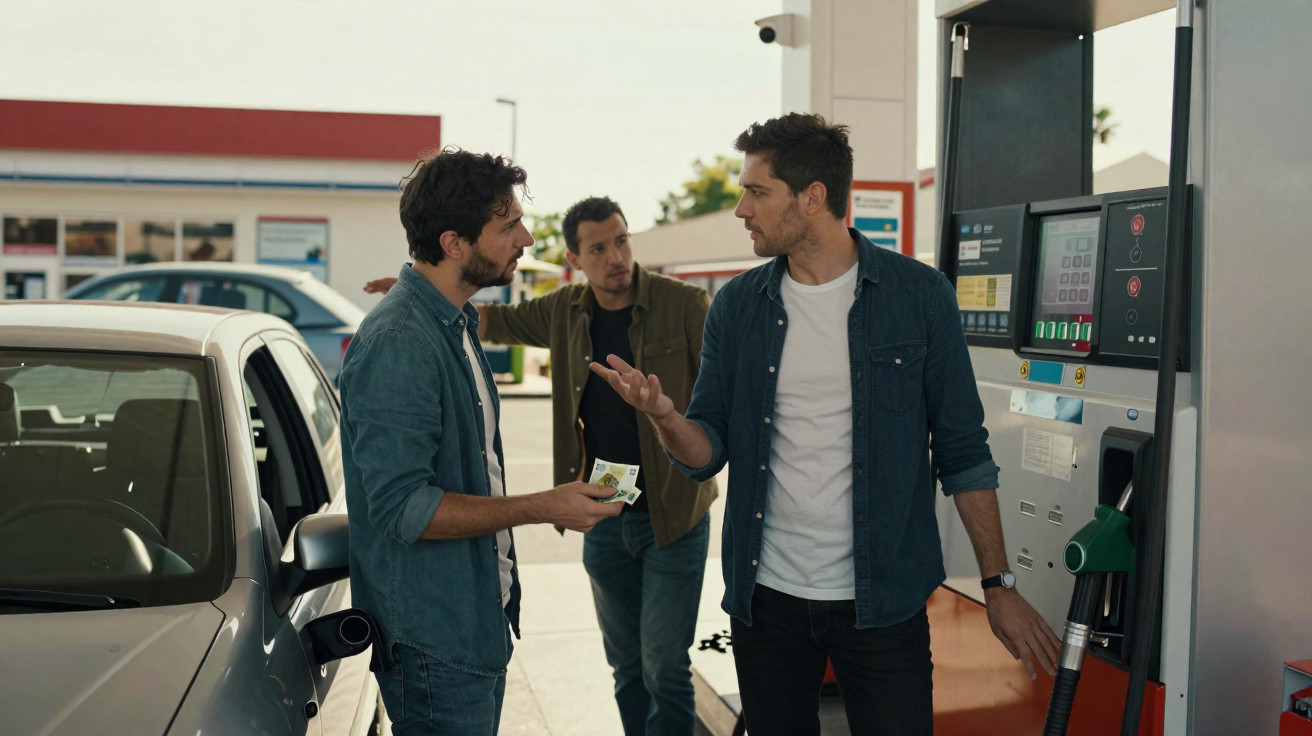
A particularly brazen scam at self-service petrol stations in France is currently unsettling drivers. What starts as a seemingly harmless chat by the pump can quickly turn into being pressured into paying for a stranger’s full tank. The nasty twist is that offenders don’t lead with violence: they rely on people’s willingness to help, then apply pressure at the crucial moment.
How the pump scam works
At first glance, the approach seems unremarkable. A stranger strikes up conversation while someone is filling up. They claim their card won’t work or that they have hardly any cash. Then they offer a five-euro note if the other driver will put a few litres of fuel through on their own card.
Many people think, “Five euros, a bit of fuel, that’s fine” and agree. But the moment the card is already in the terminal and the nozzle is in the other car’s filler neck, the tone changes.
From favour to coercion: when they suddenly want the whole tank filled
Once the nozzle is in place, the offenders show their true colours. Often, additional people appear who are said to be with the person asking for help. They stand close to the victim, talk rapidly, and crank up the pressure.
A small favour turns into a kind of extortion scenario – many people pay for the full tank out of fear or sheer overwhelm.
If you are standing at a dark, nearly empty station, you usually want the situation over quickly. When two or three people are around you, refusing can feel threatening. People affected report amounts of up to 90 euros being charged to their card for the other person’s tank-rather than the few euros originally agreed.
Why this scam works so well
The trick pulls several psychological levers at the same time:
- Element of surprise: While filling up, many drivers have their mind elsewhere-work, family, or the fuel prices. Being approached out of the blue catches them off guard.
- A sense of insecurity: Quiet, poorly lit, or unattended stations don’t feel safe. When someone feels uneasy, they are more likely to give in.
- Willingness to help: People don’t want to seem cold-hearted in an apparent emergency. The offenders deliberately play on sympathy and social pressure.
- Embarrassment: Many find it hard to say a loud, clear “No” when asked directly for help.
That mix of moral pressure and low-level fear leads many victims to pay anyway-even when they can sense something is off.
Hotspots: where offenders strike most often
In France, reports are increasing particularly in larger cities and their outskirts. Stations with the following features are especially affected:
| Feature | Why it appeals to offenders |
|---|---|
| Self-service without staff at the till | No employees available to intervene |
| Card payment only | Victims already have their card in the terminal |
| Remote location | Few witnesses and low risk for offenders |
| Night-time and early morning | Darkness and very little customer traffic |
Reports from French cities such as Nantes suggest the pattern is highly consistent; only the place and time change as different groups move on.
How drivers can spot the scam early
Knowing the typical signals can significantly reduce the risk. Common warning signs include:
- A stranger approaches directly at the pump and seems noticeably pushy.
- They offer a small note and ask you to “just put a bit of fuel through”.
- Other people are already lingering near the stranger’s vehicle.
- The person stands unusually close to the card terminal or your car door.
If you realise early on that more than a small favour is being demanded, you can defuse the situation before it escalates.
Practical tips: how to protect yourself at the petrol station
A few clear rules can greatly limit the risk:
- No fuel “deals” with strangers: Refuse any request to pay for someone else’s fuel-no matter how believable the story sounds.
- Keep your distance: Don’t let anyone crowd the card terminal or your pump. Ask them politely to step back.
- Choose safer stations: Prefer well-lit sites with staff and cameras, especially at night.
- Stay in the car if it feels wrong: If someone approaches in a suspicious way, lock the doors, close the windows, and drive away if you can.
- Keep your card in view: Never leave the card terminal unattended while strangers are nearby.
What to do if you’re approached
If you find yourself in this situation, you can still respond without putting yourself at risk:
- Answer clearly but calmly: “I’m afraid I can’t help you.”
- Get in, lock the car, and go to a different petrol station.
- Call the police from a safe place if you were pressured or threatened.
- If possible, note the registration number, vehicle type, and a description of the people involved.
Your personal safety comes first. No stranger has the right to make you pay their fuel bill.
If things escalate: what to do in an emergency
If it does turn into a threatening situation, your wellbeing matters most. Money and fuel costs can be replaced; your health cannot.
- Avoid any physical confrontation.
- If you can, move to a well-lit area or closer to other people.
- Contact the police via the emergency number-110 in Germany, 112 across Europe.
- Report the incident to the petrol station operator afterwards as well.
If you become a victim, you should still report it despite any feelings of embarrassment. Without reports, investigators can hardly identify patterns or offender groups.
Other fuel-related scam variants
The five-euro tactic is only one of several ways criminals exploit drivers at the pump. Reports from France also mention, among other variants:
- A staged breakdown: A car appears to have run out of fuel at the roadside; the driver doesn’t ask for help pushing, but specifically asks someone to pay for fuel with their card.
- Makeshift “mini petrol stations”: In remote areas, strangers sell supposedly cheap fuel from jerry cans or improvised pumps.
- Heavily diluted fuel: The liquid in the container can harm the engine, with damage far exceeding the supposed “bargain price”.
These offers can look tempting when normal prices are high. From a technical standpoint, they are risky: contaminated or mislabelled fuel can seriously damage the injection system, filters, and catalytic converter.
Why fraudsters have an easy time right now
Rising living costs and high fuel prices are putting many drivers under strain. Anyone who already feels every fill-up in their wallet is more susceptible to “good value” offers and emotional stories about unlucky people with no money. Offenders take advantage of that.
On top of this, more modern sites operate almost fully automatically: no kiosk, no staff on site, just camera surveillance. It may be efficient, but many people miss having a visible point of contact-creating ideal conditions for intimidation.
Practical rules of thumb for everyday life
A few simple guidelines help at everyday refuelling stops:
- If possible, fill up during the day and at stations you know.
- Stay sceptical of emotionally charged stories about cards not working or alleged emergencies.
- Help indirectly instead: point people towards emergency numbers or breakdown services rather than paying yourself.
- Talk to family and friends about these scams so inexperienced drivers are warned too.
Forecourt scams often target people who were simply trying to be kind. Setting firm boundaries, recognising the risks, and protecting your card consistently removes much of the offenders’ room to manoeuvre.



Comments
No comments yet. Be the first to comment!
Leave a Comment