
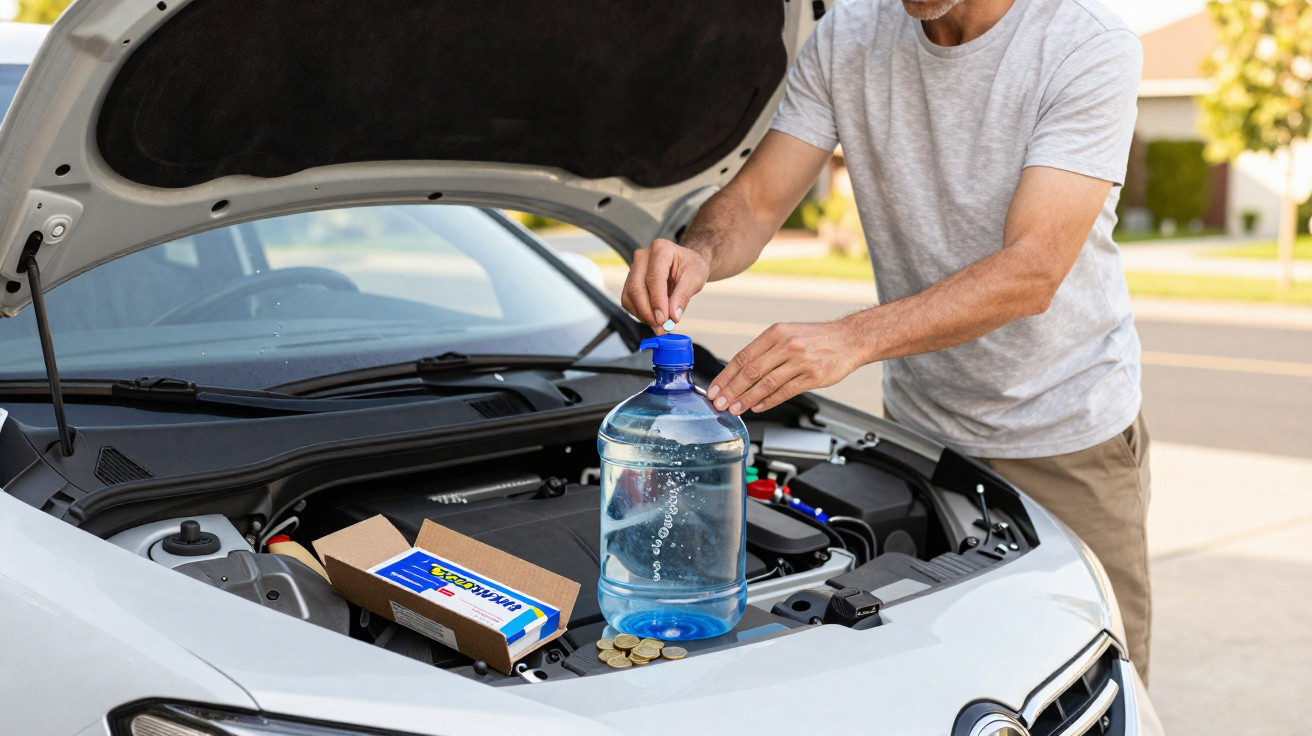
Many drivers instinctively pick up a ready-mixed canister of windscreen washer fluid in the supermarket or at the petrol station. It’s convenient, sure - but it’s surprisingly pricey and usually means more plastic waste. That’s why more motorists are switching to a simple DIY option that costs only a few pence, keeps your view of the road clear, and can be mixed in minutes.
Why traditional windscreen washer fluid costs so much
Anyone who drives long distances regularly will recognise the problem: insects, dust, pollen and road grime quickly coat the windscreen. Usage of washer fluid climbs sharply, especially in spring and summer. A 5-litre canister of a branded product can easily cost 3,50–5,00 € - and it’s often empty again after just a few weeks.
On top of that, most off-the-shelf mixes are largely water. So you’re paying not only for the cleaning agents, but also for the bottled water itself, the packaging, and the transport. That’s exactly where the cheaper alternative comes in.
"Instead of hauling a heavy canister every time, all you need is a small tab and tap water - and 5 litres of windscreen washer fluid is ready to go."
The budget solution: effervescent tablets for windscreen washer fluid
For a while now, small cleaning tabs designed for the windscreen washer system have been appearing in car accessory shops. They look a bit like dishwasher or washing machine tablets, but they’re formulated specifically for cleaning the windscreen.
The principle is straightforward: the cleaning ingredients are packed into a concentrated tablet, while the liquid comes straight from the tap - added directly into the reservoir under the bonnet.
How to use the tablets correctly
Even drivers who prefer not to tinker with anything technical can manage this easily. Essentially, it takes only three steps:
- Fill the windscreen washer reservoir under the bonnet with tap water.
- Drop in one cleaning tablet.
- Wait a few minutes until it has dissolved completely.
That’s it - you now have a ready-to-use mix in the reservoir. In practice, one tablet typically makes around 5 litres of windscreen washer fluid. Depending on the brand, you’ll usually pay well under 20 cents per fill.
The maths adds up: how much drivers really save
In shops, a ready-to-use 5-litre canister often costs about 4 €. Cleaning tablets, depending on the seller and pack size, commonly come in at roughly 15 to 18 cents each. In other words, the difference per refill is about 3,80 €.
| Product | Amount | Ø cost | Price per 5 litres |
|---|---|---|---|
| Ready-mixed canister | 5 litres | 3,50–5,00 € | approx. 4,00 € |
| Cleaning tablet + tap water | 5 litres | 0,15–0,18 € per tab | under 0,20 € |
If you use your car frequently and rely on the washer system regularly, that can quickly add up to a double-digit saving over a year - with no real loss of convenience.
More boot space, less plastic waste
Another benefit becomes obvious once you’ve tried it: packets of cleaning tablets are tiny. Ten tablets will fit in a drawer, the driver’s door pocket, or the glovebox. The days of canisters taking up half the boot are over.
At the same time, you can significantly cut plastic use. Instead of buying new rigid plastic containers over and over, you’re left with only a small packet - usually a film wrap or a small box. That means less waste and fewer resources used.
"Using tablets doesn’t just save money - it also saves space and plastic, a rare triple win for your motoring budget."
The catch: what to watch out for in winter
As appealing as this sounds, one issue genuinely concerns many drivers. A lot of tablets are intended only for use above freezing or in mild frost. They may clean well, but they don’t necessarily prevent the liquid in the reservoir from freezing.
In areas where winter temperatures drop well below zero, that can cause trouble. If the mix freezes in the tank or the lines, the washer system stops working. In the worst case, hoses can be damaged.
A simple way to make a winter mix
If you want the cost benefit without giving it up in cold weather, you can make the mixture “winter-proof” yourself. Household methylated spirits or a comparable cleaning alcohol product works for this.
- Mix one tablet with about 5 litres of water as usual.
- Add around 250 millilitres of alcohol.
- Give the liquid a brief shake or stir in the canister before pouring it in - or add the alcohol directly into the reservoir under the bonnet.
Alcohol lowers the freezing point of the liquid noticeably. In typical winters, this amount is often enough to prevent freezing. If you live somewhere particularly cold, you can increase the amount carefully, but keep an eye on your vehicle manufacturer’s guidance.
Who tablets suit - and who they don’t
Tablets aren’t equally ideal for every driving routine. A quick look at how you use your car makes the choice easier.
- Occasional drivers and city commuters: If you mainly drive in town and rarely face severe sub-zero temperatures, you’ll benefit a lot. Cleaning performance is usually more than adequate, and one tablet often lasts several weeks.
- High-mileage motorway drivers: Tablets also work well here, because topping up is quick and they take up virtually no room in the car - handy on long trips.
- Drivers in colder regions: Ready-made winter mixes from shops can be the simpler option if you don’t want to handle alcohol yourself. If you don’t mind mixing, you can still use tablets and only switch to canisters during the coldest part of winter.
Where drivers can buy the tablets
These small tablets are now available in many car accessory shops, and sometimes in larger DIY stores as well. They’re especially common online, where multi-packs of 10, 20 or even 50 tablets are frequently offered.
Buying in bulk can reduce the per-tablet price further - and may cover your needs for one or two years, depending on mileage. If you’re unsure, it’s sensible to start with a smaller pack and see how you get on with the cleaning power and the scent in your own car.
How well do the tablets clean in everyday use?
In day-to-day driving, many products perform surprisingly well. Insect remains, road spray and fine dust usually come off about as reliably as they do with conventional windscreen washer fluid. Differences tend to show up with heavy greasy film, for example after many motorway miles behind lorries, or with stubborn winter grime.
Some drivers simply run a second wipe cycle or briefly increase the spray. If you regularly clean the windscreen manually at a petrol station with a sponge, you’re unlikely to notice much difference.
Safety, risks, and what matters when mixing
If you’re mixing your own, there are a few points worth keeping in mind. Tap water is perfectly fine in most areas. In places with very hard water, light limescale deposits can build up over time in the system. If you want to be extra cautious, mix with demineralised water from a canister - it’s inexpensive and helps protect the jets.
When using alcohol: don’t pour it from the bottle over a hot engine, don’t smoke, reseal the bottle properly and store it out of children’s reach. If you spill any, wipe it up with a cloth rather than leaving it to evaporate openly.
Scent also matters. Some tablets are heavily perfumed. That can feel “fresher”, but it may irritate sensitive people if the smell is drawn into the cabin when spraying. If you’re prone to that, try a small amount first.
An easy step towards cheaper motoring
DIY windscreen washer fluid isn’t a flashy hack - it’s more of a quiet everyday switch. That’s exactly the appeal: buy one packet of tablets and you’re sorted for months. No heavy lifting, no last-minute purchases at an expensive petrol station, and less waste.
Many people who switch to the cheaper mix end up wondering why they spent years paying for water pre-bottled in a plastic canister. If you want to cut motoring costs without sacrificing convenience, this small change can be an unexpectedly effective lever.






Comments
No comments yet. Be the first to comment!
Leave a Comment