
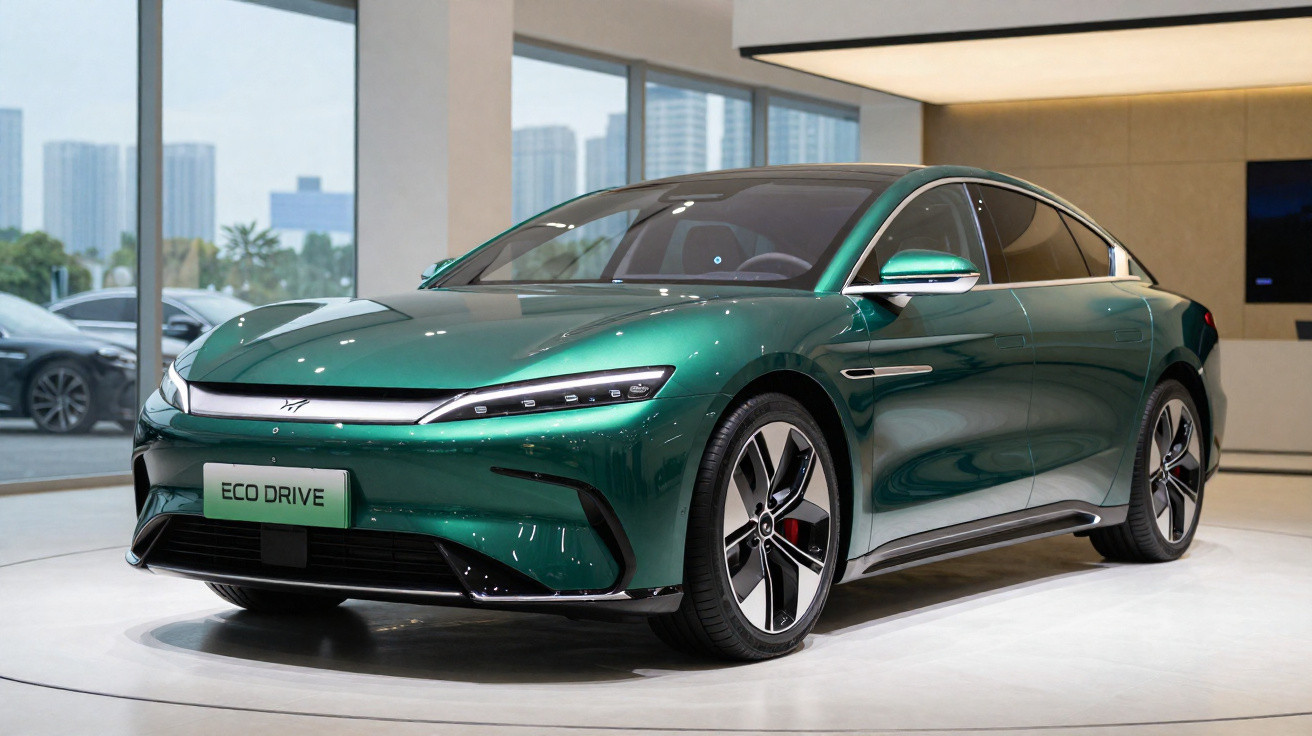
We moan, we compare filling stations, we download apps to shave a few pence off the price per litre. Yet very few motorists pay proper attention to what their own car is trying to tell them. Right in the middle of the dashboard, a small symbol sometimes flashes, changes colour, or stays lit constantly. It doesn’t scream “immediate danger”, so it gets dismissed. And that’s exactly where fuel is wasted - quite literally.
On a dull morning on the A13 near London, traffic moves in an almost trance-like stream. Inside the cabins are tired faces, coffee in hand, the radio murmuring away. Most drivers barely glance at the instruments, except for a quick check of speed or fuel. In a white Golf, a small green “shift” indicator lights up, suggesting a gear change. The driver does nothing. He holds the gear too long, the engine revs higher than it needs to, and the fuel burn rises without him noticing.
Elsewhere, a leaf-shaped icon goes out the moment the driver accelerates sharply - a gentle reminder that they’ve switched from economical driving to a more thirsty style. Again, no reaction. We’ve all had that moment of annoyance at the pump without asking how much of the bill comes from simply ignoring these little lights. This time, the dashboard is telling a story that’s worth listening to.
The discreet warning light that silently burns your fuel
In most modern cars, there’s an unobtrusive indicator offering a running commentary on your driving. Sometimes it’s a small arrow telling you when to shift up or down. Sometimes it’s an “eco” score shown as a few bars, or a green light that comes on when you drive smoothly. Plenty of motorists write it off as a marketing gimmick. In practice, it’s tied directly to real-time fuel consumption.
A study by the European Environment Agency found that optimising driving with these visual aids can cut consumption by 5 to 15%. On an £80 tank, that’s roughly £4 to £12 saved - without changing car, without a miracle app, without a subscription. A Birmingham private-hire driver said that once he learned to follow the gear-shift prompt, he was saving almost the equivalent of a full tank each month. Same car, same routes - just fresh attention to a symbol he’d ignored for three years.
From a technical standpoint, the indicator draws on engine load, revs and, in some cases, even the gradient of the road. It isn’t trying to force you to crawl along; it’s trying to keep the engine in the sweet spot, where it uses the least fuel for the work required. When the little arrow tells you to “shift up”, it’s because the engine is spinning faster than it needs to. When the eco rating drops, it’s because your right foot is demanding too much, too quickly. It isn’t a moral judgement - it’s live feedback on the energy you’re burning. Ignoring these cues is like driving with half your vision missing when it comes to your own fuel budget.
How to get comfortable with the indicator that can lighten your fill-up
The easiest approach is to turn the indicator into a “quiet game” with yourself. On your next journey, pick a low-stress moment on a route you know well. Watch when the indicator appears - the shift arrow, the eco gauge, or the green economical-driving light. Then, for a few minutes, try to keep that light on for as long as you can, or follow the gear-change prompts as soon as they show up.
In practical terms, that means shifting up a little earlier, easing off the accelerator more gently, and reading traffic so you can lift early rather than braking hard at the last second. On a motorway, it can be as simple as holding a steady pace instead of yo-yoing between 65 and 80 mph. Let’s be honest: nobody does this perfectly every day. Still, even if you apply these habits on one trip in three, your trip computer will already show a clear difference in litres/100 km or mpg.
Many drivers give up after the first week because they think “it makes no difference” or “it’s too slow”. In reality, the feeling of slowness mostly comes from breaking the habit of hard acceleration. After a few days, the drive feels smooth again - but the consumption stays lower. Then there’s pressure from other drivers: the one sitting on your bumper because you pull away more gently, the one who beeps at the lights. That’s when the indicator becomes a silent ally: it reminds you that every time you give in to that pressure, you’re the one paying the extra at the pump - not them.
A trainer in economical driving put it very plainly:
“Your car gives you the right answer every second. The real question is: do you want to listen, or do you want to keep paying to ignore it?”
To put this into practice without overthinking it, a few simple guidelines help a lot:
- Watch the indicator on just one journey a day - not constantly.
- Try an “eco” style only on the longest, smoothest section of your route.
- Compare the displayed consumption before/after over a week.
With a structure like this, the indicator doesn’t become another source of stress. Instead, it turns into a low-key coach you check in with when you have the headspace - and it pays you back with a few pounds saved every time you fill up.
Learning to see your dashboard as an ally, not just scenery
One thing stands out when you talk to drivers who’ve changed how they use this indicator: they stop treating the dashboard as a set of compulsory warning lights and start viewing it more like a cockpit. They realise these symbols aren’t there for decoration. Between the fuel gauge, average consumption, the shift prompt, and eco/normal modes, it all tells the same story: whether you’re turning fuel into motion - or into waste.
That shift in perspective often brings a quiet sense of pride. Some people enjoy trying to beat their “best” low-consumption figure on a familiar run. Others swap their numbers on forums or with colleagues. You can smile at the idea of people comparing mpg the way others compare step counts on a smartwatch, but the outcome is real: a smaller bill, a bit less CO₂, and sometimes a calmer drive. It’s not eco-perfection - it’s a realistic improvement, within reach of ordinary drivers.
And this forgotten indicator says something broader about how we use cars now. Modern vehicles are packed with sensors, instant calculations and built-in prompts that get brushed aside - out of habit, tiredness, or mistrust of technology. Yet behind that tiny green light or harmless-looking arrow sits years of engineering designed to make every tank a little less painful. Ultimately, the question isn’t only what a litre of petrol costs today. It’s how much energy, noise and money still gets thrown away every day simply because a tiny indicator remains ignored.
| Key point | Detail | Why it matters to you |
|---|---|---|
| The eco driving indicator | Gear-change arrows, eco gauges and green lights linked to consumption | Understand it’s not a gimmick, but a tool to cut your running costs |
| Real-world impact on consumption | Potential 5 to 15% fuel saving on everyday journeys | Put a figure on how many pounds you could save each month |
| Small habits to adopt | Change gear when prompted, accelerate more gently, keep a steadier speed | Simple actions you can try on your very next drive |
FAQ:
- Which indicator wastes the most fuel when you ignore it? Most often it’s the gear-change prompt or the eco gauge linked to your driving style. Dismissing its advice - especially in town or on A-roads - keeps the engine in a less efficient rev range.
- Will following it make me drive too slowly? No. It doesn’t cap your speed; it mainly optimises when you change gear and how you accelerate. You can travel at the same pace, just with fewer surges and lower consumption.
- Do all cars have this sort of light? Most newer models do, in one form or another. Older cars don’t always have it, but you can use the rev counter and simple rules of thumb (shift between 2,000 and 2,500 rpm in a petrol car, a bit lower in a diesel).
- Is it really worth it on short urban trips? Yes - city driving is exactly where sharp acceleration and poor gear changes cost the most fuel. Even over ten minutes, the difference adds up day after day.
- I find the indicator annoying - how do I benefit without getting obsessed? Treat it as an occasional reference, not a constant command. Pick one journey a week where you follow it properly, compare the consumption, and keep only the habits that feel natural.






Comments
No comments yet. Be the first to comment!
Leave a Comment