
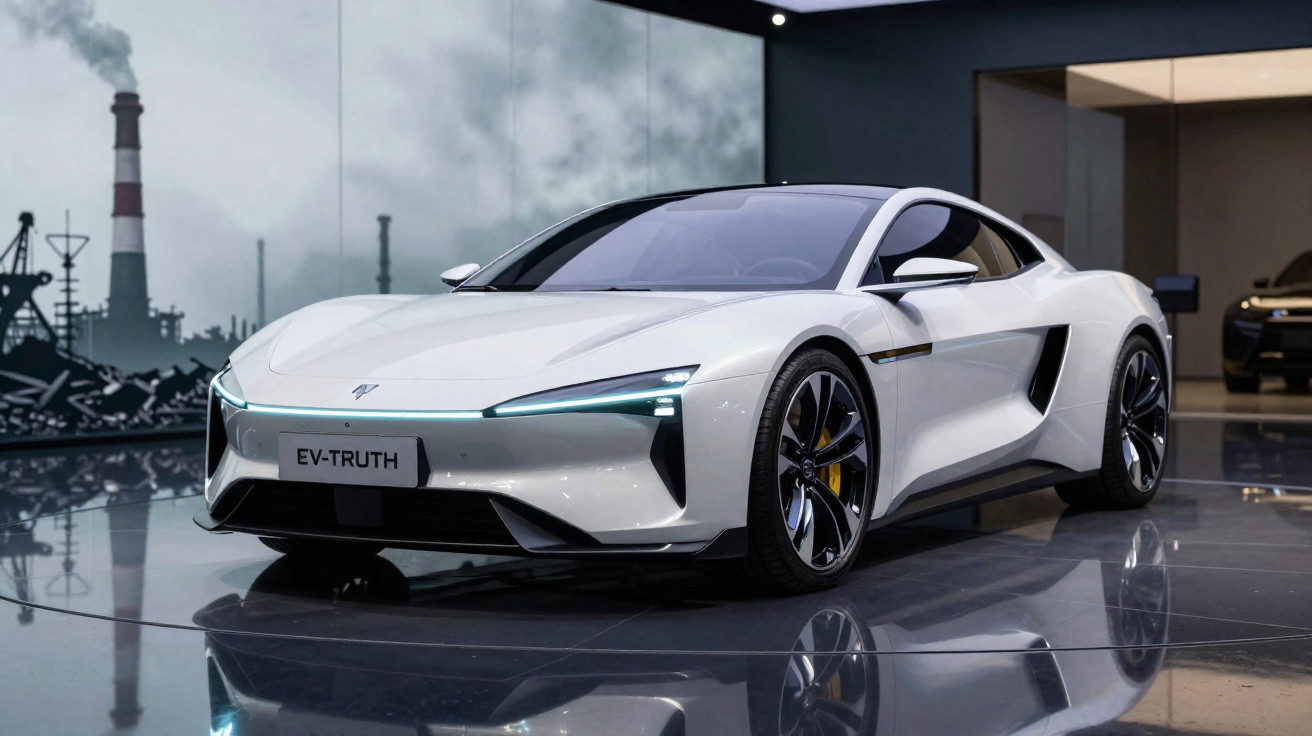
The first time I watched my neighbour plug in his new electric SUV, he wore a proud, quiet expression - almost solemn. The connector snapped home, the charging indicator lit up, and he gave himself that small nod people do when they think they’ve made a good choice. No exhaust fumes, no grumbling engine - only the faint hum of electrons and a sense of moral relief.
Further down the road, someone passed by with a cloth tote bag reading “There is no Planet B” and smiled approvingly at the sight. For a moment, it felt like a postcard from tomorrow: tidy, hushed and apparently guilt‑free.
But travel a few thousand kilometres away and the very same vehicle tells a far less flattering story.
The dark side of a “clean” car
We’re drawn to symbols. That blue “EV” badge on a tailgate has become one - today’s equivalent of a recycling mark on a rubbish bin. You glide past petrol stations with the feeling you’ve left behind something grimy and obsolete.
And yet, by the time that car leaves the factory, it has already used up an unexpectedly large slice of carbon budget. The battery, the rare metals and the electronics don’t appear by magic: they come via mines, blast furnaces, container ships and production lines that still run largely on fossil fuels. The tailpipe may be spotless; the origin story often isn’t.
Consider the battery - the beating heart of any electric car. A mid‑sized pack can weigh 400 to 600 kg and depends on lithium, nickel, cobalt, manganese, copper and graphite. Those ingredients don’t fall from the sky.
In Chile’s Atacama Desert, lithium‑rich brine is pumped up from underground aquifers and left to evaporate in vast turquoise ponds. Nearby communities watch their water supplies diminish while the rest of the world uploads glossy images of “green mobility”. In the Democratic Republic of Congo, artisanal miners - sometimes including children - dig for cobalt with hand tools in dangerous pits, earning only a few dollars a day. Later, that same cobalt sits inside a sleek, minimalist dashboard display… hidden in plain sight.
When researchers assess cars across their entire life cycle, they often see an awkward curve. At the outset, an electric car can carry a larger “carbon backpack” than a comparable petrol model. Making the battery consumes huge amounts of energy - and in many industrial regions that energy is still closely tied to coal and gas.
The apparent magic shows up only after you’ve driven for long enough. When the electricity you use is relatively low‑carbon, the gap narrows and eventually reverses. After tens of thousands of kilometres, the electric vehicle begins to “pay back” its upfront pollution and pull ahead. But that tipping point depends on the electricity mix and on how large and heavy the vehicle is. A huge electric SUV charged on a coal‑fired grid? That green halo doesn’t last long.
What you can actually do as a driver
One quiet decision changes almost everything: go smaller. It helps your budget, but it also shrinks the footprint you’ll never see in a glossy brochure. A lighter electric car can make do with a smaller battery. A smaller battery means fewer mined materials, less energy used in factories and less emissions from shipping.
Rather than chasing range like a phone addict desperate to see 100%, think about what you genuinely drive in a typical week. For many city and suburban routines, 250–350 km of real‑world range is plenty. That single choice can dramatically reduce the size - and impact - of the battery without changing your day‑to‑day life.
The other major lever is sitting in your wall socket and in your energy tariff. The very same car can be almost “green” or distinctly grey depending on what is flowing through the cable. Charging overnight on a coal‑heavy grid is not the same story as charging on a mix that includes wind, solar, nuclear or hydro.
Most of us recognise the moment: you plug in wherever you can because the battery is low and you can’t be bothered to think. Let’s be honest - nobody runs a full carbon calculation before every charge. Still, you can push the average in a better direction. Home solar, verified green tariffs, or even favouring slow overnight charging instead of relying on rapid chargers all show up in that invisible ledger.
“An electric car isn’t automatically clean. It’s a bet that the system around it will get cleaner over time.”
- Prefer smaller batteries
If you can manage with less range, your car needs fewer critical minerals and creates less production pollution. - Use genuinely low‑carbon electricity
Seek out verified green energy contracts, community solar, or shared rooftop schemes where you live. - Keep your car longer
The longer an EV stays in service, the more its initial “carbon backpack” is spread out and offset by cleaner kilometres. - Drive lighter and slower
Every extra kilogram, every sharp burst of acceleration, increases tyre and brake wear - another form of pollution that rarely gets discussed. - Think beyond the car itself
Public transport, cycling, car sharing and walking remain the clear winners for low‑carbon mobility.
The question nobody likes to ask
There’s a question that can make a dinner table go quiet: what if the core issue isn’t the engine, but our fixation on a private car for every adult? Electric cars can feel like a neat hack - a way to keep the same lifestyle while soothing the conscience. Parked outside tidy homes, they seem to murmur: you don’t need to change, just upgrade.
But the mining pits keep widening. Motorways remain jammed. Land taken for car parks, charging hubs and ever‑wider roads doesn’t magically recover simply because the drivetrain is electric. The shape of our towns and cities, the price of getting around for lower‑income households, and the hours lost to congestion - none of that vanishes when you swap a nozzle for a cable.
The more serious conversation begins once we admit that “less” may be part of the answer: less car, less weight, less speed, less distance. That doesn’t have to mean a bleak life with fewer opportunities. It can mean services closer to home, more remote work, trains and buses that actually run on time, and protected cycle lanes that don’t feel like a daredevil challenge. It can also mean sharing cars that sit unused for most of the day, rather than duplicating the same vehicle on every driveway.
In that kind of world, an electric car can still be useful - it just stops being the hero. It becomes one character among several: one piece of a puzzle that is bigger than batteries and chargers.
Some people will read this and feel accused, especially if they spent a small fortune on an EV and genuinely wanted to do the right thing. That response is human. Guilt and defensiveness are the hidden emissions of the climate debate. Uncomfortable truths aren’t there to shame us; they’re there to broaden the frame and remind us that your car, green or not, is connected to something larger than the grid: the way we organise our lives.
Next time you pass an electric car - quiet, smooth and reassuring - picture its invisible tailpipe stretching back through mines, factories, wind farms, coal plants, recycling facilities and city councils. Then ask yourself: which part of that chain can I actually influence, starting tomorrow morning?
| Key point | Detail | Value for the reader |
|---|---|---|
| Battery production has a heavy footprint | Big EV batteries rely on energy‑intensive mining and manufacture of lithium, cobalt, nickel and more | Helps you assess marketing claims and opt for more sensible battery sizes |
| Electric cars depend on the grid mix | The same model can be low or high carbon depending on whether your electricity comes from coal, gas or renewables | Explains why greener electricity choices and charging habits genuinely matter |
| Mobility habits matter as much as technology | Vehicle size, speed, years of use and alternatives such as public transport or cycling reshape the real impact of your EV | Offers levers beyond “buying the right car” to cut hidden pollution |
FAQ:
- Is an electric car really cleaner than a petrol car?
Across its full lifetime, an EV usually produces less CO₂ - particularly on a low‑carbon grid - but it often begins with higher manufacturing emissions because of the battery.- What part of an electric car pollutes the most?
Battery manufacturing and raw material extraction are the largest hidden sources, alongside electricity generation if your grid relies heavily on fossil fuels.- Does the size of the battery really matter?
Yes. A larger battery means more materials, more factory energy, more weight on the road, and more tyre and brake pollution.- What can I do if my region’s electricity is dirty?
Choose smaller EVs, drive fewer kilometres, support renewables politically, look for certified green tariffs and, where possible, charge during cleaner generation periods.- Isn’t public transport better than any electric car?
In most dense areas, buses, trains and trams - especially when electrified - produce far lower emissions per passenger‑kilometre than private cars, even electric ones.


Comments
No comments yet. Be the first to comment!
Leave a Comment