
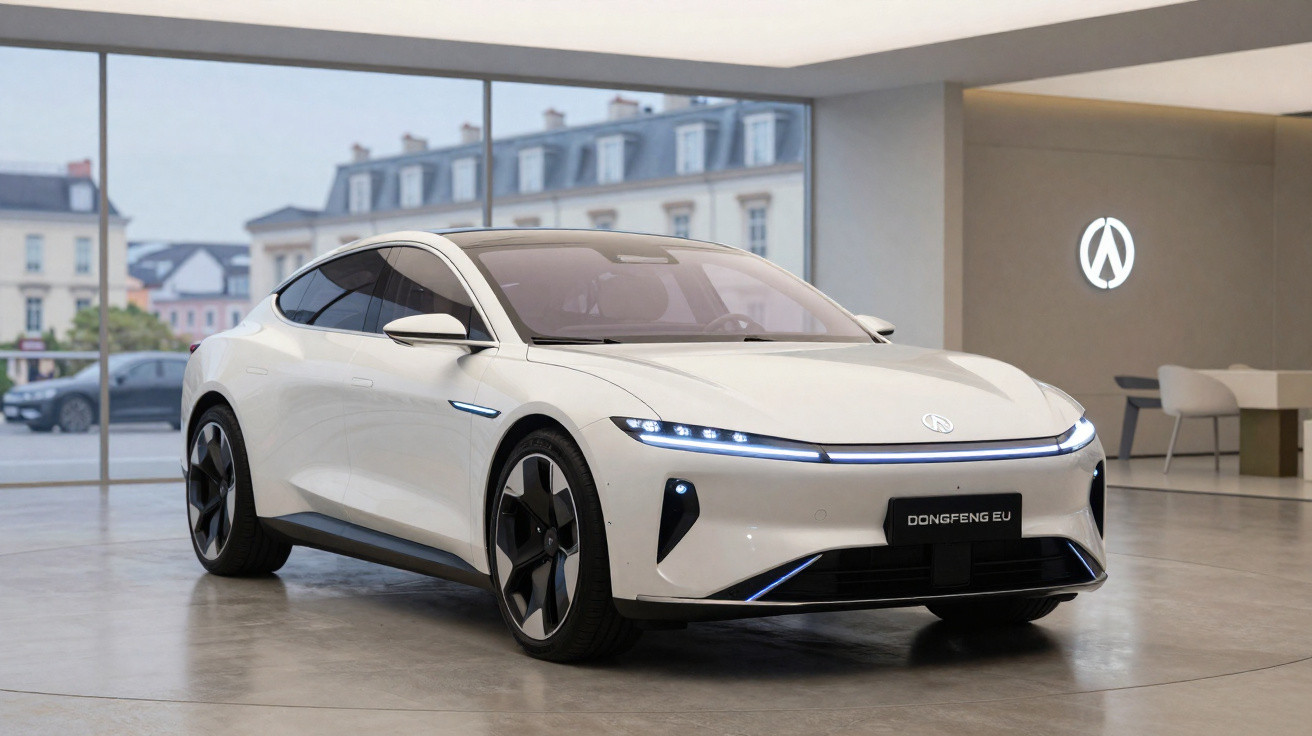
In the last quarter of 2024, Dongfeng arrived in Portugal. The Chinese brand starts the new year with a clear target: to sell more than 1,000 units in the country during 2025.
As part of this market launch, we had the chance to speak with Xie Qian, CEO of Dongfeng Europe. In Portugal, the brand is represented by Salvador Caetano, the long-established Toyota importer and, more recently, also the Portuguese partner for another major Asian player: BYD.
With Dongfeng setting its sights on Portugal, what is the plan for Europe-and how does this Chinese manufacturer intend to compete locally? Xie Qian, CEO of Dongfeng Europe, explains the strategy in his own words.
The strategy for Portugal and Europe
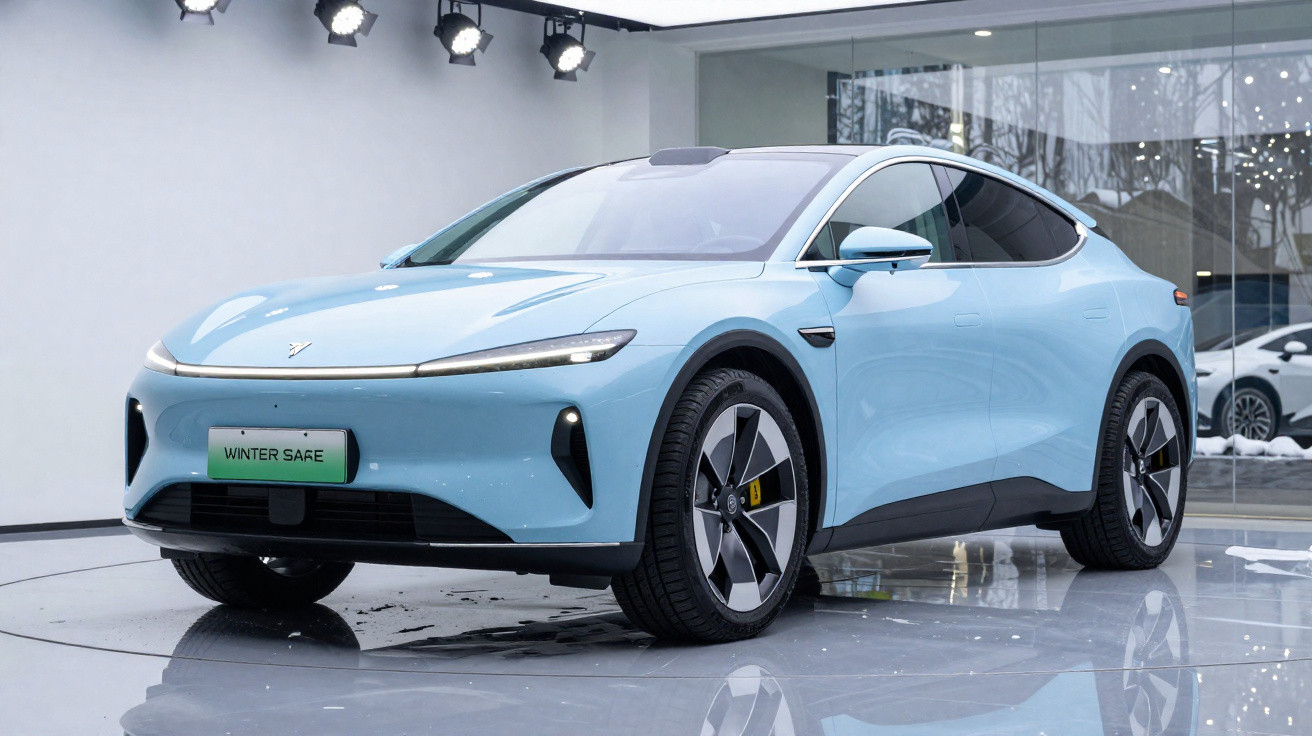
In Portugal, the Dongfeng Box will be the brand’s smallest model, but it is also the one in which Dongfeng and Salvador Caetano are placing the highest expectations. Pricing is set below €27,000.
Pricing, the Dongfeng Box, and EU tariffs
That figure could have been lower, were it not for the European tariffs applied to electric cars "made in China". It was precisely because of the EU’s caution towards Chinese brands that we opened the interview on this topic.
RA: Is the European automotive industry being threatened by Chinese brands? The EU argues there is an objective of conquest behind this offensive.
XQ: We never think about "conquering" anyone or any market. We want to cooperate. Our objective is to provide products and services to customers. We are not a threat. We will never be a threat to anyone.
We have extensive experience working with other manufacturers, such as our partnerships with Nissan, Honda and Stellantis. For that reason, I do not see us as a threat to anyone.
RA: Regarding Dongfeng factories in Europe, how is that plan developing? We have heard about Italy, but now there is information about other countries, such as the Czech Republic. Where does the process stand?
XQ: To be honest, up to now there is no fixed or defined plan. We are focused on building our sales and aftersales network.
First, we want to introduce our products in Europe to build brand awareness and a customer base. Only afterwards, once we reach a certain sales volume, will we assess whether it makes sense to open a factory in Europe.
RA: Are there defined timelines?
XQ: The timeframe for that programme would be around two years for implementation, before considering local production. However, everything will depend on the progress of our development in Europe, especially in terms of volume.
Local partners, distribution, and why not direct sales
RA: Turning to distribution. BYD decided in some markets to move away from partnerships with local importers in order to be more competitive. Why did you not choose the same route?
XQ: At Dongfeng, we have been in the industry for a long time and we have worked with local partners in China over the last 50 or 60 years. That experience has been positive and it is part of our DNA. In Europe, we strongly believe that, as this is a new market for us, it is crucial to work with local partners.
As I mentioned, customers often trust the salesperson or the dealer in their community more than they trust the brand itself. A cooperation model with importers and dealers is mutually beneficial, and that is our strategy rather than choosing a direct-sales model.
Sustainability, design in Europe, and hybrid options
GC: In your presentation you said one of Dongfeng’s key values is harmony with the environment. Does your emissions focus end at the tailpipe, or do you also consider environmental impact during production?
XQ: That is a great question. I think the first step always starts with the product. During use, we want to reduce emissions to zero-that is also the goal of Europe and China. We are working in the same direction, to reduce CO2 emissions globally.
The second step is manufacturing and the whole value chain. It is essential to take care of factories, suppliers, and all related processes. Our approach covers both the product and production. We need to control and reduce emissions in both areas. We are already adopting measures such as using solar panels at various factories to reduce the consumption of non-sustainable electricity.
GC: On design. We have seen South Korean brands such as Kia and Hyundai invest in European R&D (Research and Development) and design centres to establish themselves in the European market. Are you considering doing the same?
XQ: That is always on our minds: to produce a localised product. We want relevant infotainment systems and a suitable European design.
In fact, Dongfeng has an R&D centre in Sweden, in Trondheim. For example, that is where we designed the first car using virtual reality (VR). We want to offer European consumers a European design, coming from China.
GC: You spoke a lot about 100% electric models in your presentation, but Dongfeng also has hybrids in its portfolio. Do you intend to explore that technology in the European market?
XQ: We are willing to bring hybrid models to Europe as well. But, in any case, we are looking at every possible approach to do our best to serve European customers. That is our main concern.
Dongfeng’s three brands in Portugal
Fully owned by the Chinese state, Dongfeng has more than 60 years of history. It is not only a car brand: Dongfeng also manufactures military vehicles, industrial equipment, components and motorcycles.
In passenger cars, its presence is split across three brands. Dongfeng sits in a more mainstream position, alongside two other brands: Voyah, which has premium ambitions, and M-Hero, whose models are primarily off-road.
According to Xie Qian, Dongfeng Motor Corporation aims to launch "a further four models in Europe" by 2027. As early as next year, the Dongfeng C-SUV and 007 models are expected, as well as the Voyah Courage and Passion.
Dealer network, Salvador Caetano coverage, and the 2025 expansion
These vehicles are available through six locations in Salvador Caetano’s dealer network (Lisbon, Porto, Coimbra, Viseu, Leiria and São Miguel). The Portuguese importer has also taken care not to place BYD outlets in direct overlap with Dongfeng representation-at least in the initial phase.
Throughout 2025, the dealer network will be expanded to a further nine cities, ensuring full nationwide coverage.
Comments
No comments yet. Be the first to comment!
Leave a Comment