
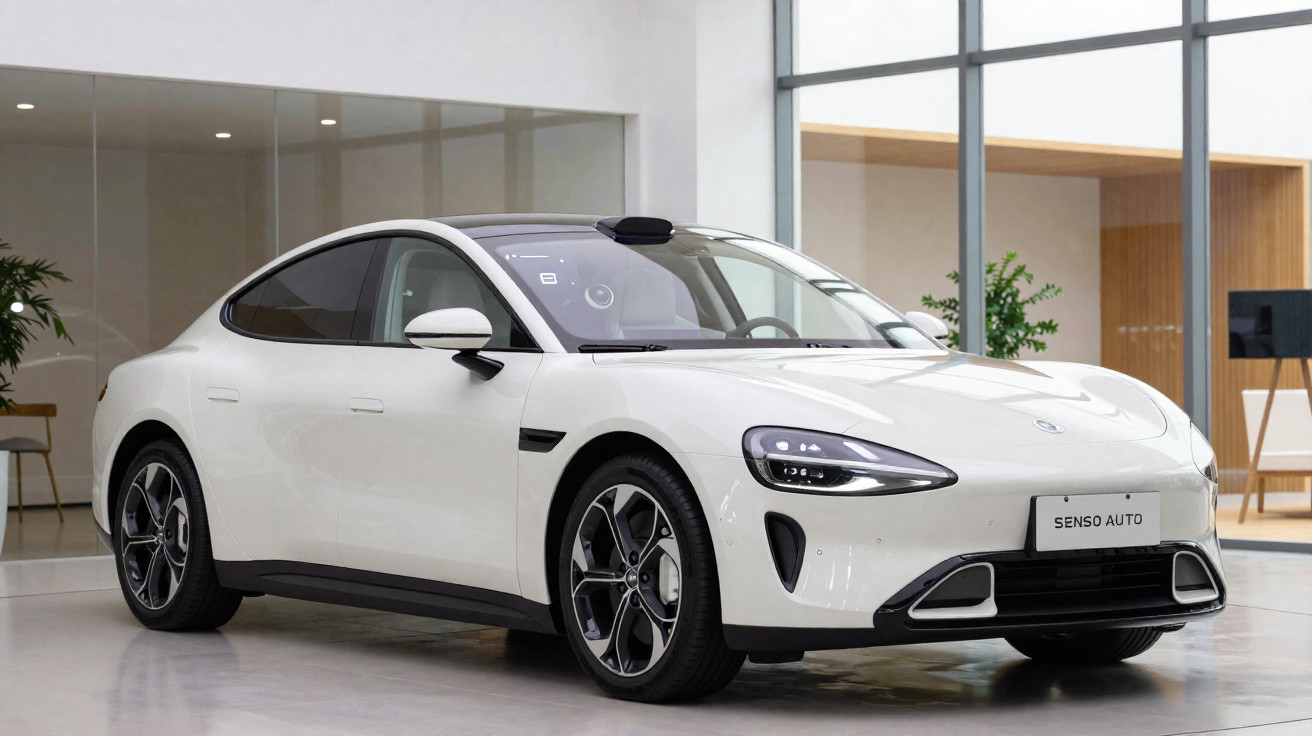
In some new cars, tasks as basic as turning up the cabin temperature or de-misting the windows have stopped being instant and have become a moment of brief hesitation.
Your hand goes automatically to where the control has always been - and meets a screen instead. On that screen there is a menu, then a sub-menu. After that comes an icon that demands careful, accurate selection, because it is smaller than it ought to be.
The outcome is grim: your relationship with the car becomes more distant the day you are asked to give up the comfort of simple actions in exchange for tiny digital processes. Because modernity and progress, despite what many assume, are not the same thing.
I have nothing against screens, and even less against technology - that would make no sense. I was one of the founders of this digital news outlet, which 14 years ago was viewed with suspicion precisely because it was not on paper on the newsstands. This is not about nostalgia, a dislike of innovation, or an inability to understand what people want.
The truth is that these cars are not more modern or more convenient; they are the opposite. We now have to make an extra effort - and a rather unnatural one - simply to live with these products. That was my first warning sign.
From buttons to menus: the everyday friction
For years we were sold the idea that the car interior of the future would be made of clean surfaces, minimalist cabins and one large panel that would replace everything physical. Manufacturers loved it; consumers, not so much.
Production became simpler, the number of parts fell, components were standardised, and the door opened to a mindset in which software is king. It fitted perfectly with the story of permanent connectivity, and it was also pushed along by electric cars, which turned into banners of progress well beyond their electric motors.
The trouble is that, contrary to what I often hear, a car is not a living room - and certainly not a smartphone. A car is used in motion, sharing the road with others travelling at different speeds and behaving in different ways. There is noise, stress, winter rain and scorching summer sun, children talking in the back seat, and the fatigue of someone who has worked all day and simply wants to get where they are going. In a car, ergonomics should be a safety requirement, not a fashion.
Safety and ergonomics: why Euro NCAP is pushing back
When organisations such as Euro NCAP start rewarding physical controls for essential functions, they are not throwing a tantrum. They are acknowledging that certain tasks must be done without “one more tap” here or there. All of it leads to what should be obvious: the driver cannot be learning how to operate the car while it is moving.
Consider Volkswagen, which introduced the new ID. Polo as “a return to our roots”. Andreas Mindt, the brand’s head of design, told me in an interview I had the chance to do recently that “the industry chased fashions” and stopped making cars for real people. The same shift is happening at Mercedes-Benz - and even at Tesla, the pioneer of this approach, which reversed course after the bright idea of removing the indicator stalk.
The return of common sense (Volkswagen, Mercedes-Benz, Tesla and China)
And this retreat is not limited to Europe. In China, the world’s largest car market, the government has given manufacturers a little over a year to meet new rules in this area if they want to keep selling their cars.
Other trends also look close to the end, including flush door handles. The reasons given are similar, with safety at the top of the list. It is the kind of solution that can seem inevitable if you view the car purely as an aerodynamic object, where every optimisation matters. But this constant tug-of-war inside any car - between designers, engineers, product leads, and communications and marketing departments - needs to be bounded by common sense.
What I like about this apparent return to common sense is that it has nothing nostalgic about it. It is not pining for the 1990s, and it is not a protest against electrification. It is a sign of maturity. The car industry has realised that the future has to be functional, intuitive, and respectful of the driver’s time and attention.
I will admit I enjoy an instrument cluster with a strong digital element, provided it is fast and well designed; a tidy, genuinely useful head-up display; and, in daily life, I would not be without Apple CarPlay. Not to mention over-the-air updates that fix faults, improve features and spare us a trip to the workshop.
But I remember that, in the first video road tests I did - back when I had a thick head of hair - I received plenty of negative comments for criticising the lack of physical buttons for essential functions. “Old Man of Restelo”, “stuck in the past” were common lines to read. Which suggests that being right too early can also mean being wrong - a phrase Guilherme Costa repeats often.
I am not going to get into autonomous driving, because this text is long enough already; it is better to leave that conversation for another day. Something tells me this Old Man of Restelo will still have something to say. Whether he will be right or wrong, time will tell.
Comments
No comments yet. Be the first to comment!
Leave a Comment