
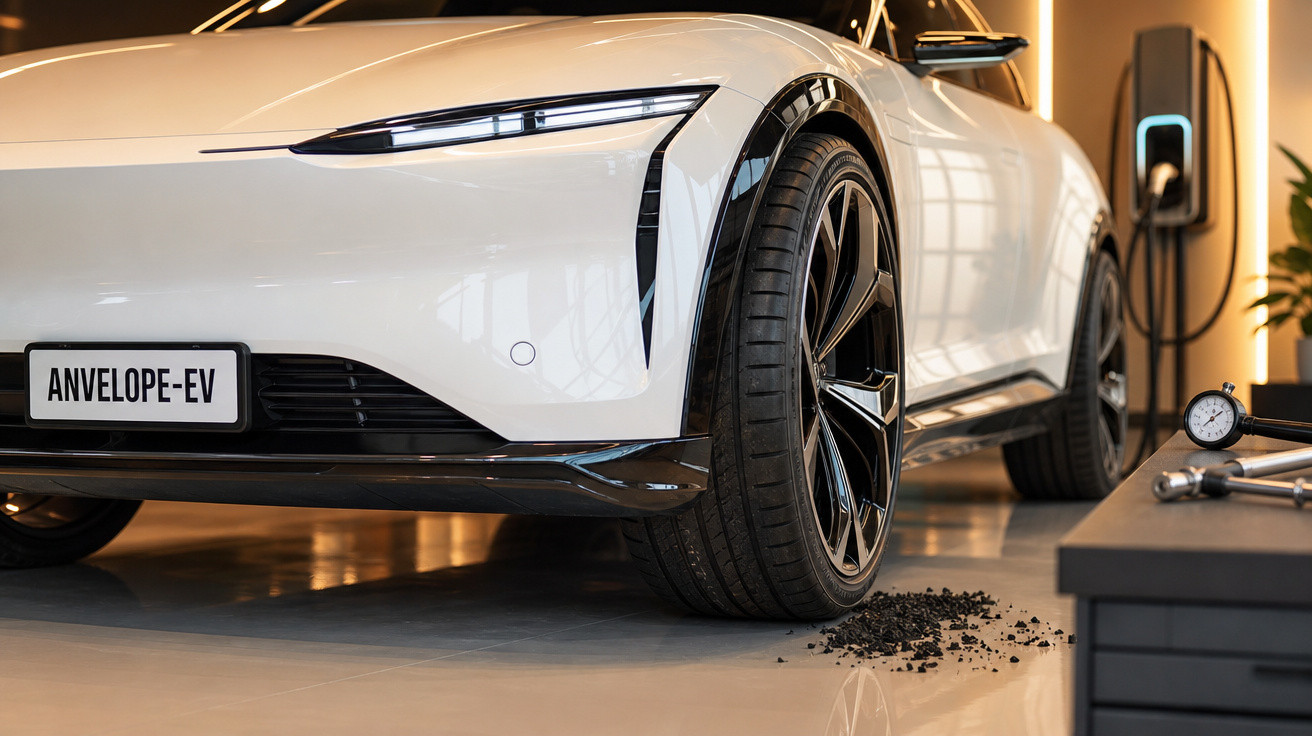
Many first-time EV owners are delighted to see fuel spending disappear and service intervals reduce, only to face an unpleasant shock a few years later at the tyre centre. The quiet, immediate shove that makes electric driving so appealing is placing unusual strain on tyres – and the cost of that strain is beginning to look steeper than the price of charging.
The silent punch of electric power
Two features make electric cars feel distinctly different from petrol and diesel vehicles: almost silent running and instant torque. That mix is excellent for refinement and performance, but it is much harsher on tyres than many buyers expect.
An electric motor delivers peak torque the instant you press the accelerator. Every brisk getaway from the lights sends a sudden surge of force through the front wheels on many models. That repeated load scrubs away tread more quickly than in a conventional car, where power tends to build more gradually.
Then there is the weight problem. Batteries are heavy. Even a small electric hatchback can weigh 200 to 400 kg more than a comparable petrol car. That added mass is constantly pressing on the tyres and increases wear during heavy braking, tighter cornering and stop-start urban driving.
EV tyres are often being replaced thousands of miles earlier than on similar petrol or diesel cars, mainly because of extra weight and instant torque.
Fleet data from multiple markets suggests the same pattern: EV tyres typically cover fewer miles than those on combustion cars, sometimes lasting only 18,000 miles rather than roughly 25,000. On high-output models driven enthusiastically, the difference can be greater still.
Why “EV tyres” exist – and why they cost more
Tyre manufacturers have not been idle. As electric vehicles have become more common, brands such as Michelin, Continental, Goodyear and Pirelli have quietly launched dedicated ranges for battery-powered cars, often marked with “EV”, “Elect” or similar wording on the sidewall.
These tyres have to solve a difficult engineering challenge. They must support heavier vehicles, handle strong acceleration, roll efficiently to protect range and remain quiet enough not to undermine the near-silent cabin.
Inside the new generation of electric tyres
- Reinforced structure: stronger internal belts and sidewalls help carry the extra battery mass without excessive deformation.
- Low rolling resistance compounds: specially developed rubber blends reduce energy loss, helping to improve range.
- Enhanced grip: tread patterns are adjusted to cope with high torque without constant wheelspin.
- Noise reduction tech: some premium tyres include foam inside to dampen road noise.
All of that technology raises the price. Across Europe and North America, like-for-like comparisons frequently reveal a clear cost difference between standard tyres and EV-focused versions in the same size. For a typical family EV, a full set of four quality EV tyres can cost £80–£150 more than comparable non-EV options.
Once you combine higher purchase prices with quicker wear, the total lifetime cost of EV tyres can easily overtake what many motorists spend on electricity.
Manufacturing expenses have climbed as well. Raw materials, energy costs and research investment have pushed tyre prices up by more than 20% in just a few years, with EV-specific products hit especially hard because they depend on more advanced materials and testing.
When tyres outpace charging on your monthly budget
For many EV drivers who mostly charge at home, electricity remains fairly inexpensive. Over three or four years of ownership, the standout costs are often depreciation, insurance…and tyres.
| Item (typical EV, 10,000 miles/year) | Estimated annual cost (UK/US range) |
|---|---|
| Home charging electricity | £250–£500 / $300–$600 |
| Public fast charging (occasional) | £100–£250 / $120–$300 |
| Tyres (average driving style) | £350–£700 / $400–$800 |
These figures differ by country and energy prices, but they point to a clear trend: tyres can quietly overtake electricity in the “cost of running an EV” category, particularly on heavier or more powerful models.
Driving style: the cheapest tool you have
Not every EV driver faces the same costs. How you use the accelerator has a direct effect on how often tyres need replacing.
Habits that eat tyres on electric cars
- Full-throttle starts at every green light.
- Late, heavy braking rather than using regenerative braking early.
- Frequent high-speed motorway driving with rapid lane changes.
- Running under-inflated tyres, which heats the rubber and speeds up wear.
A smoother driving style can pay off quickly. Gradually applying the accelerator, coasting more and allowing regeneration to slow the car gently can significantly increase tyre life. Checking pressures monthly and before longer journeys also helps, especially as EVs often require higher tyre pressures than petrol cars.
Small improvements in driving habits and maintenance can save an EV owner hundreds of pounds or dollars in tyre costs over only a few years.
Choosing the right tyre for your EV
Faced with rising prices, some owners are tempted to fit the cheapest tyres available in the correct size. That decision can prove costly through faster wear, poorer range and longer stopping distances – hardly an appealing compromise.
What to look for when buying EV tyres
- Load index: ensure the tyre can carry the EV’s weight; many need a higher rating than older petrol cars using the same size.
- Rolling resistance rating: stronger ratings can add a few extra miles of range per charge.
- Noise level: low noise matters more when there is no engine sound to mask it.
- EV compatibility label: tyres designed for electric or hybrid vehicles often include reinforcements and compounds suited to high torque.
Mid-range EV tyres can be a sensible middle ground. Products sitting between basic budget brands and premium performance options often deliver reasonable longevity and refinement without the highest price.
Hidden side effects: dust, particles and the environment
Tyre wear is not only a financial concern. Heavier vehicles wearing through more rubber raise concerns about microplastics and road pollution. Although EVs reduce exhaust emissions, their extra weight can increase the release of tiny particles from brakes and tyres, especially in urban areas with frequent stopping.
Some manufacturers are testing new compounds aimed at cutting particle emissions while also extending tyre life. Others are developing sensors that track wear and temperature in real time, sending alerts before issues arise. These connected tyres, already trialled on certain EVs, may become standard as electrification continues.
Planning ahead: simulations and real-life scenarios
Take a typical electric SUV covering 12,000 miles a year. If its tyres last 20,000 miles, the owner will probably replace them roughly every 18–20 months. At £700 or $800 for a full set, that comes to around £450–£500 or $500–$550 per year on tyres alone.
Now compare that with home charging on off-peak tariffs. Many drivers in that situation will spend considerably less on electricity over the same period. In reality, the “cheap to run” electric SUV can look rather less cheap once tyre bills begin to pile up.
By contrast, a lighter electric supermini, driven gently and mostly around town, may stretch a good set of tyres to 25,000 miles or more. With mid-range EV-optimised tyres fitted, the annual cost falls sharply, showing that weight, power and driver behaviour matter just as much as the badge on the boot.
Key terms worth understanding
A few phrases regularly appear on EV tyre specification sheets and quotes:
- Rolling resistance: the energy lost as a tyre flexes while rolling. Lower resistance means better efficiency and range.
- Load index: a number showing the maximum weight each tyre can safely support. EVs often require higher load indexes.
- Regenerative braking: braking that uses the electric motor to slow the car and recharge the battery, reducing use of conventional brakes.
- Tyre noise rating: a measure of how much sound a tyre generates on the road, increasingly important in quiet EVs.
For anyone planning the move to electric, including tyre costs alongside charging, insurance and depreciation gives a much more realistic view. The fuel savings are genuine, but the rubber on the road is quietly generating its own invoice – and for many drivers, that invoice is now larger than the one from the electricity supplier.

Comments
No comments yet. Be the first to comment!
Leave a Comment