
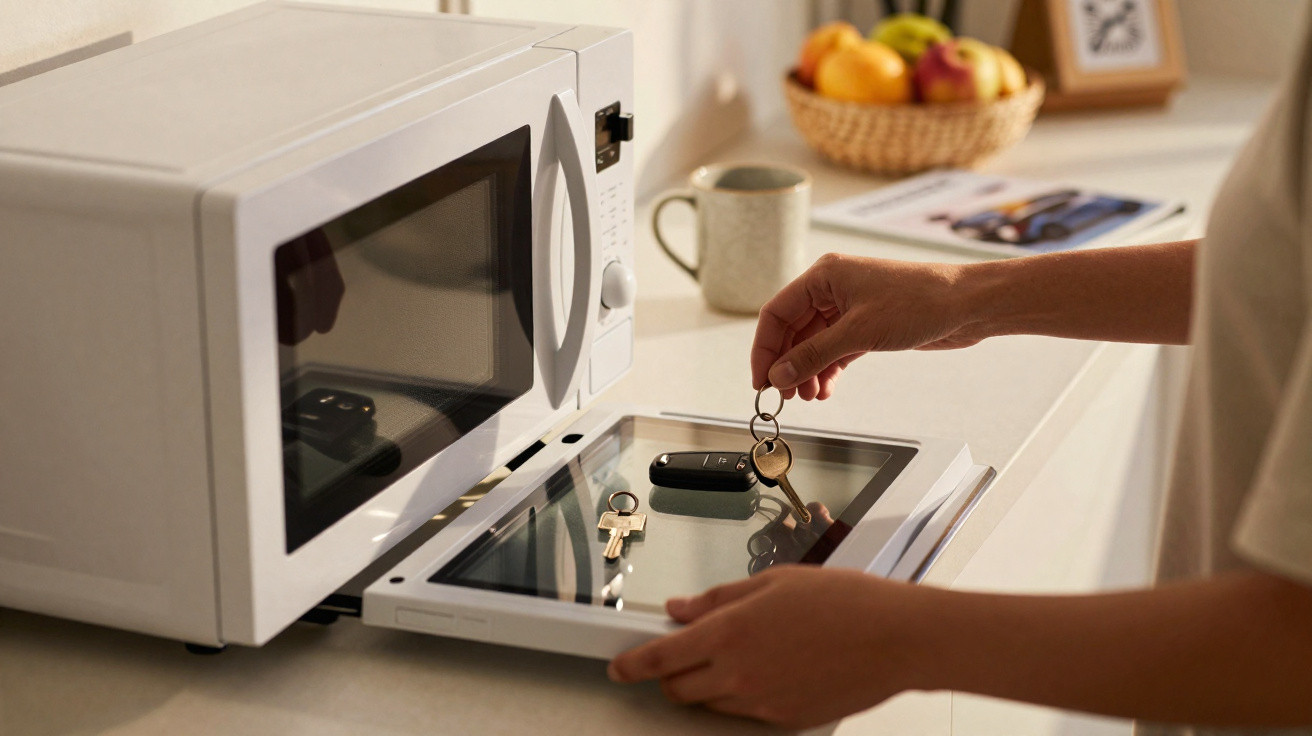
Car theft has moved on with the times. With many modern vehicles, criminals no longer need to force a lock or hotwire the ignition to steal a car. There is a quieter, simpler technique that can unlock and start cars from a distance by exploiting the electronic key.
How a relay attack works
This method is known as a relay attack. In practice, thieves pick up the key’s electronic signal from some distance away, then simply boost it and pass it on to a second device positioned close to the vehicle.
Once that happens, the car’s sensors “think” the key is nearby, so the doors unlock and the ignition becomes available automatically. Because it takes only moments and draws little attention, the theft can be almost impossible to notice.
Where does the microwave come in?
In response to this issue, an unusual workaround has become popular: using a microwave. Because a microwave oven blocks electromagnetic signals - thanks to its metal construction (a Faraday cage) that prevents signals entering or leaving - placing your car key inside the microwave and shutting the door isolates the signal, stopping external devices from capturing or amplifying it.
Faraday pouches and other signal-blocking options
For anyone who wants a safer, purpose-built option, specialists suggest dedicated electromagnetically shielded bags or boxes, commonly called Faraday pouches or Faraday boxes.
These inexpensive, convenient accessories block the fob’s signal in much the same way as a microwave, without putting the device at risk. Other straightforward approaches include wrapping the key fob in aluminium foil or storing it inside a metal container - which can also help if you are the sort of person who never quite knows where you have put your keys.






Comments
No comments yet. Be the first to comment!
Leave a Comment