
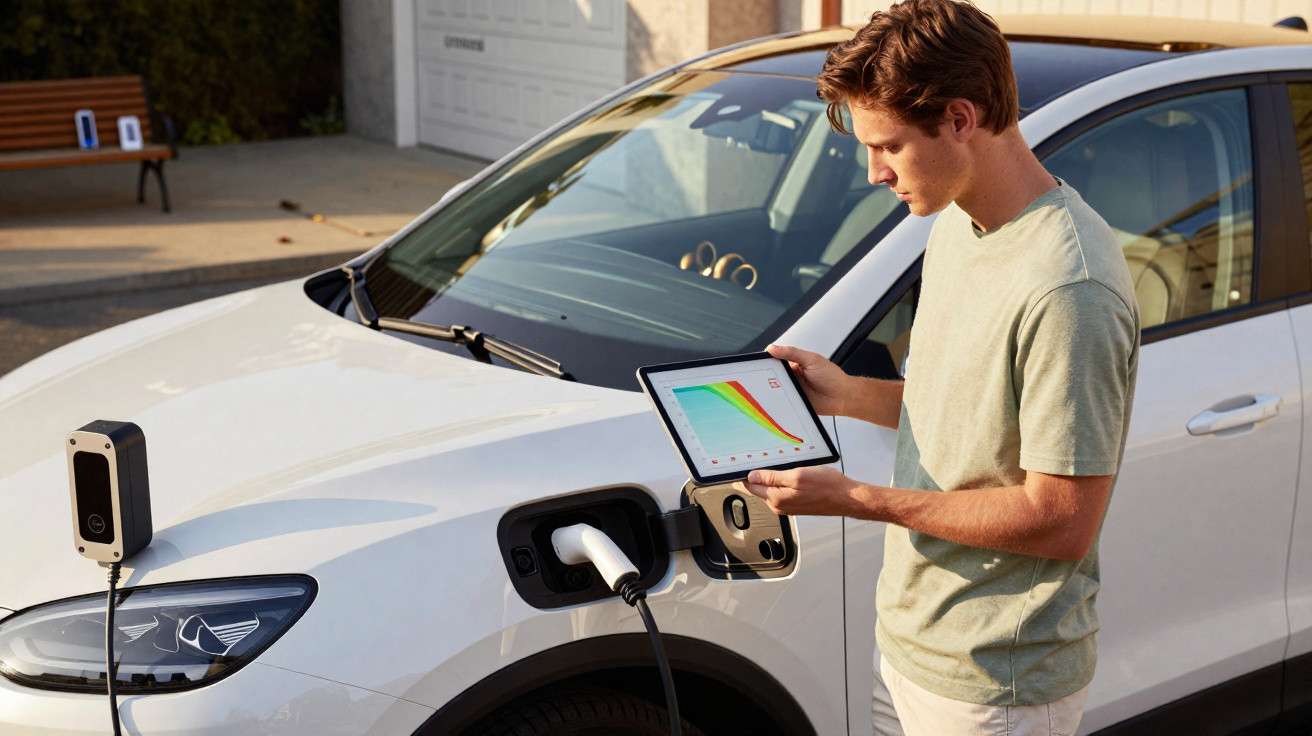
For years - and, in truth, still today - one of the biggest worries for anyone considering an electric car has been: what happens when the battery runs out of life? Battery longevity, replacement costs and what to do if something goes wrong are often the most hotly debated points.
The good news is that the most doom-laden forecasts are a long way from what’s being seen in practice. Data from Geotab, a company specialising in automotive telematics, indicates that modern electric car batteries not only last, but can outlive many mechanical components found in petrol and diesel cars.
What the Geotab data shows about electric car battery degradation
This study looked at more than 10 thousand electric vehicles in real-world use and found that average annual battery degradation sits at around 1.8%.
Put into range terms, that rate suggests that after 20 years an electric car could still retain roughly 64% of its original range - provided there are no catastrophic failures. Those events are exceptionally uncommon, with fewer than 0.5% of failures in models produced over the last decade.
As time passes - and as the number of electric cars on the road grows - more evidence continues to support these findings. Toyota, for instance, now provides a warranty of 1 million kilometres or 10 years (whichever comes first) across its fully electric vehicles.
What can speed up battery degradation
Battery lifespan is, naturally, influenced by external factors such as climate (very hot environments accelerate degradation) and charging behaviour.
For example, DC rapid charging increases wear slightly compared with slower AC charging. With NMC (nickel-manganese-cobalt) batteries, keeping the state of charge between 20% and 80% helps extend service life.
With LFP (lithium-iron-phosphate) batteries - which are cheaper but have lower energy density - the same study suggests the guidance is different: they cope better with full charges and tend to degrade less when each charging cycle is used in full.
Degradation is higher in the early years
Another key point is that degradation does not progress in a straight line. It is faster in the first years and again towards the end of the usable life. In between, the rate of wear slows down - which is why so many electric cars that are five, six or seven years old still perform very similarly to how they did when new.
At the same time, manufacturers keep refining battery thermal management systems, which help maintain the right temperature during charging and discharging - crucial for avoiding premature ageing.
In other words, the goal is not to eliminate degradation entirely. It exists, just as it does with combustion engines, turbos, EGR valves, belts and fuel injection systems. The difference is that modern electric cars have fewer components that are prone to faults or wear.
With charging networks increasingly addressed - alongside public charging costs and the faster depreciation often seen in the used market - the practical arguments against electric cars are becoming fewer and fewer.




Comments
No comments yet. Be the first to comment!
Leave a Comment