
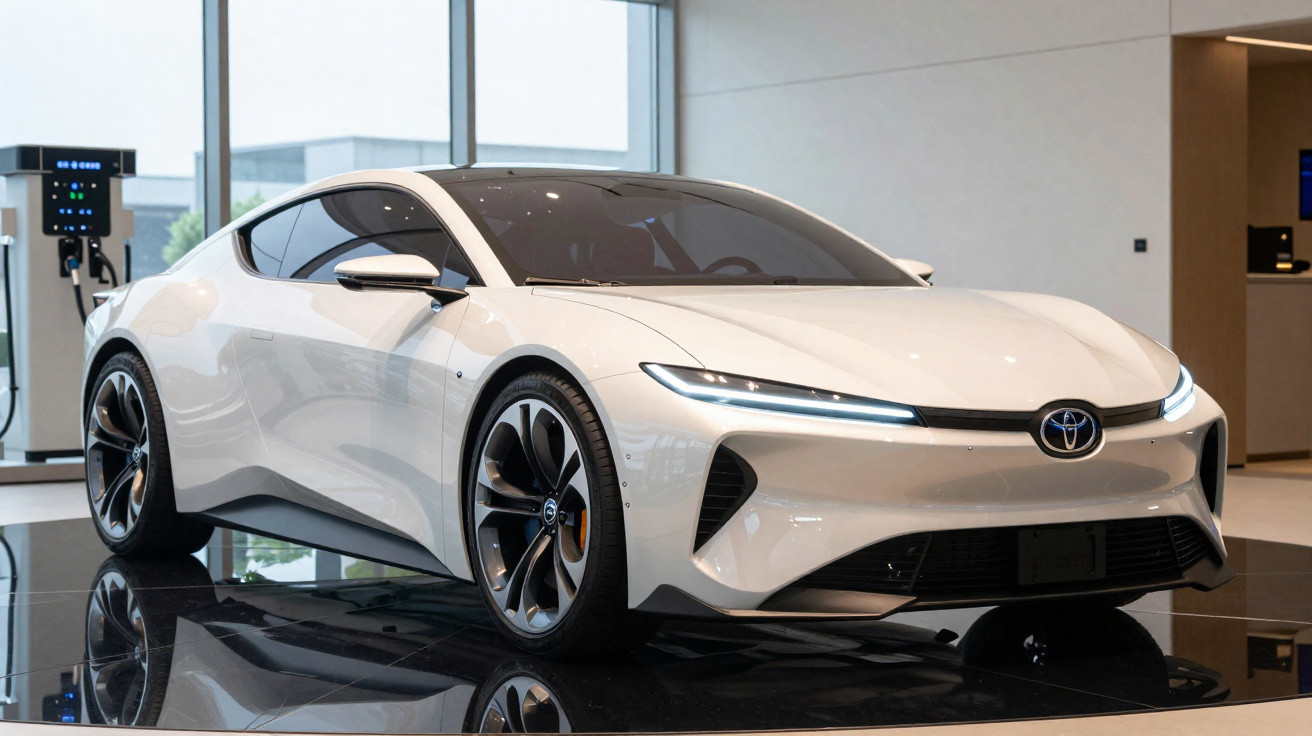
Toyota’s commitment to hydrogen is set to continue - and that promise was underlined again this year. The Japanese manufacturer argues that hydrogen should not be written off, whether as an alternative fuel in its own right or as an energy source for electric cars using Fuel Cell (fuel cell) systems. In Toyota’s view, this technology could one day take on the role that diesel still plays today.
That direction was reiterated by Sean Hanley, Toyota Australia’s Vice President of Sales, in an interview with CarExpert Australia. “Diesel isn’t going to disappear in the next decade, but later I believe hydrogen will take its place. In the long term I can’t imagine diesel as the fuel of the future.”
Hanley accepts that there are still people who “think hydrogen is a joke”, yet he remains convinced the technology can ultimately replace the diesel engine. With the right level of investment, he believes refuelling networks could build momentum and support the wider decarbonisation of transport.
Toyota and hydrogen: 30 years of alternatives and the next Fuel Cell system
Coming from a brand with three decades of experience in searching for different ways to power cars, this stance is hardly surprising. The first milestone arrived in 1997 with the Toyota Prius, the first mass-produced electrified car.
Now that hybrid technology has become one of Toyota’s strongest sales drivers, the company is also directing investment towards hydrogen. Next year it will introduce the third generation of its Fuel Cell system, delivering 20 % better efficiency and cutting production costs by 50 %.
Hydrogen: an old idea with long-standing problems
Hydrogen is far from a recent invention. Back in 1807, the De Rivaz engine already ran on a mixture of hydrogen and oxygen. In 1966, General Motors unveiled the Electrovan, regarded as the first fuel-cell vehicle, at a time when NASA was also using fuel-cell technology as part of the Apollo programme.
Even so, it took more than a century of progress and setbacks before the technology reached public roads in meaningful numbers. The Honda FCX Clarity in 2008 and the Toyota Mirai in 2014 signalled the commercial start of modern fuel-cell cars, though adoption has repeatedly been constrained by high costs and an almost non-existent refuelling network.
Fuel Cell momentum: BMW and Hyundai push on as Stellantis steps away
Toyota is not alone in persisting with hydrogen. BMW presented its new generation of fuel cells this year, with production planned for 2028. Hyundai, meanwhile, is expected to bring the second generation of the Nexo to market soon - an SUV using Fuel Cell technology. Stellantis, by contrast, labelled hydrogen a “niche segment” and walked away from the investment.
A problem called infrastructure
Across Europe today, hundreds of Toyota Mirai vehicles are already on the road, including in cities such as Berlin and Paris. However, these examples remain the exception rather than the rule. The biggest obstacle is still the same: too few hydrogen refuelling stations.
In Portugal, for instance, the Toyota Mirai is available for 74 thousand euros - if you are curious, you can check the brand’s online configurator. Yet there is only a single refuelling station across the entire country. It is located in Cascais and is operated by the local council.
Portugal’s National Hydrogen Plan foresees building “between 50 and 100 hydrogen stations” by 2030, while at European level the AFIR project (Alternative Fuels Infrastructure Regulation plan) is moving forward only cautiously. The aim is to create a “hydrogen corridor” with refuelling points every 200 km along the main routes.

Comments
No comments yet. Be the first to comment!
Leave a Comment