
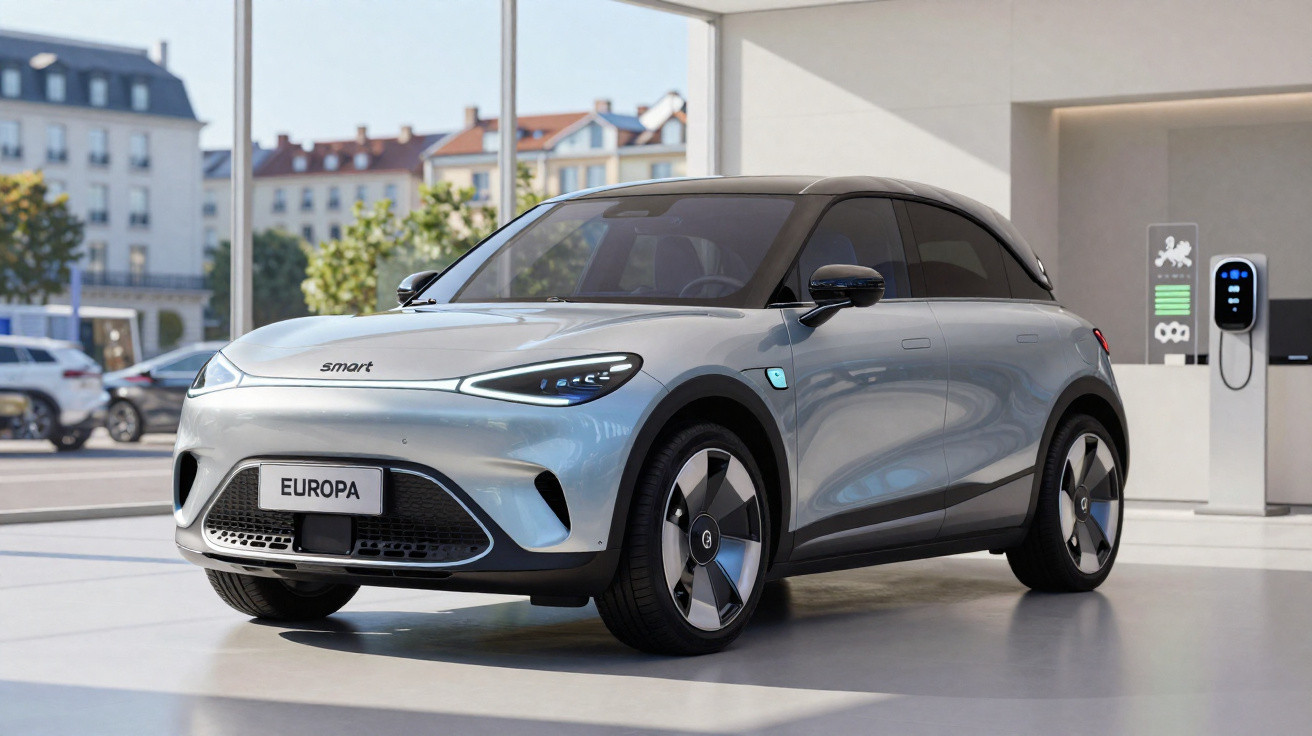
Smart Europe leadership change
Smart Europe has confirmed the appointment of Wolfgang Ufe as its new chief executive, with the role taking effect on 1 March. He will replace Dirk Adelmann, who is stepping down from the brand’s top job to take over leadership of Mercedes-Benz in Switzerland.
Dirk Adelmann’s exit to Mercedes-Benz Switzerland
“Establishing and leading Smart Europe during this formative period has been a true privilege for me. I am confident that Wolfgang will continue to build on this positive momentum,” said Adelmann. During his tenure, the executive oversaw Smart’s shift into an exclusively electric brand and broadened the range into larger vehicle segments.
Wolfgang Ufe’s experience and the Smart Germany role
Ufe is not new to the company. Since 2021, he has headed Smart Germany, where he played a central part in rolling out the country’s 100% electric portfolio. With more than 20 years’ experience in the automotive industry, he now moves into the European leadership post with a mandate to get the brand back on a growth track.
“The Smart Europe team has built an excellent foundation over the past six years. I am looking forward to leading this strong team into our next phase of growth in Europe,” Ufe said.
What’s at stake for Smart in Europe
Smart is currently dealing with a sharp drop in sales: in 2025, the brand sold only 13,100 vehicles, down 47.7% compared with 2024 (source: Dataforce). The top-selling model was the Smart #1 with 5,414 units, followed by the #3 (4,033 units) and the #5 (3,452 units).
Following the launch of the #5, the largest model in the line-up, Smart is preparing to return to the city-car segment with the #2, which is due to make its world debut next autumn. The brand has also said it will “intensify collaboration with Mercedes-Benz and the European retail network, to strengthen synergies and unlock additional volume”.
One of the pressures weighing on Smart is the European tariffs applied to electric vehicles built in China. All of the brand’s models are produced there and are subject to an 18.8% trade tariff, on top of the 10% base rate.
“While trade tariffs and a highly competitive automotive market continue to shape the industry, 2026 marks decisive milestones for smart in Europe,” the statement says. Even so, Smart has given no indication that it plans to ease off its strategy of remaining 100% electric.

Comments
No comments yet. Be the first to comment!
Leave a Comment