
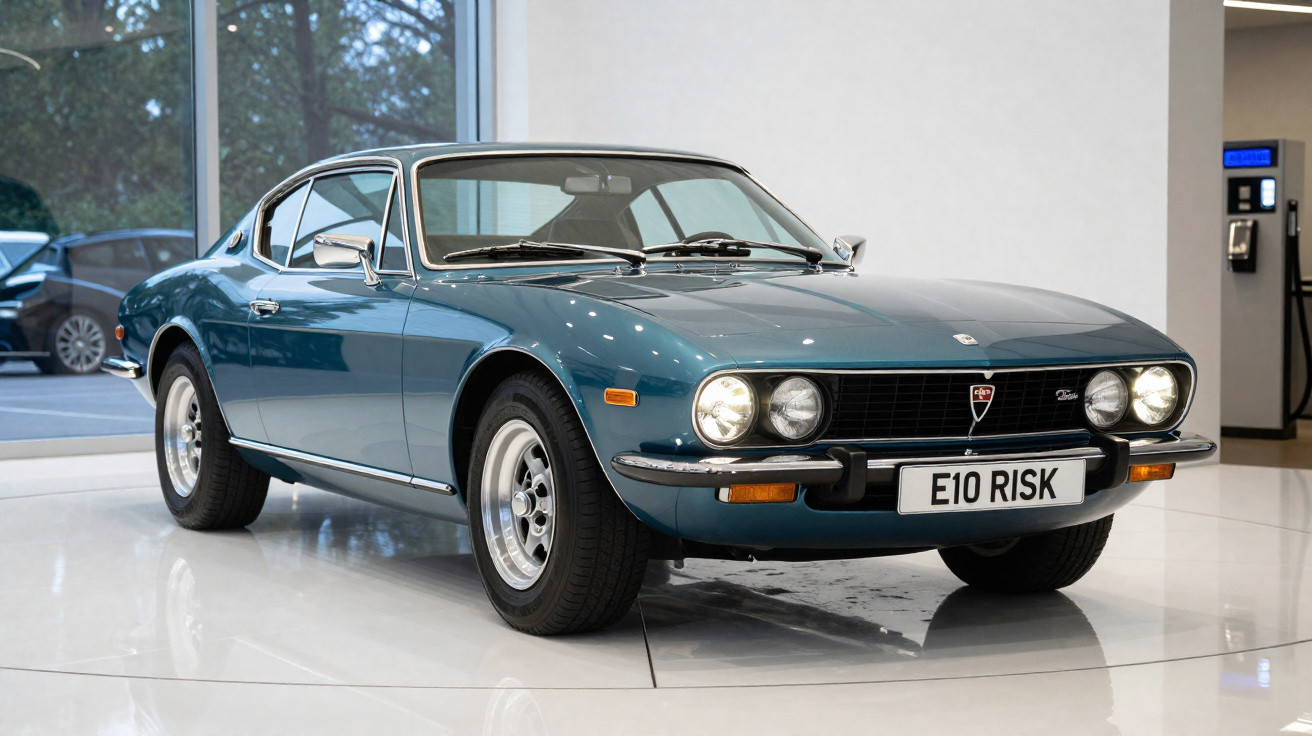
Anyone who has been driving for decades can suddenly feel like a learner at the petrol station. Where you once reached automatically for familiar 95 RON unleaded, the pump handles now show combinations of numbers and letters. For pensioners running older cars, the question is pressing: which fuel protects the engine - and which one could quietly damage it over time?
Why the classic 95 RON “Super” is disappearing
Across many European countries, the petrol line-up has changed markedly in recent years. Straight 95 RON without an ethanol label is becoming harder to find. In its place you’ll typically see blends containing ethanol, such as E5 and, increasingly, E10. Officially, this is presented as a newer, more climate-friendly approach and it is often a little cheaper per litre.
For oil companies and governments, the shift makes sense: more ethanol means a smaller fossil component in the fuel, which improves the CO₂ balance and can also mean lower taxes in some cases. For many modern cars, it’s completely unproblematic.
“For older vehicles, switching to E10 can become a real danger for the engine - especially if the ‘wrong’ fuel ends up in the tank again and again.”
Many older people on a tight pension watch every penny at the pump. If E10 is, on average, a few cents per litre cheaper, it’s tempting. The problem is that, with an older car, the saving can be false economy.
E5, E10, 95, 98: what the labels actually mean
The newer names can sound complicated, but they’re easy to decode:
- 95: 95 octane (RON), broadly what used to be sold as “Super”.
- 98: higher octane (RON), previously often called “Super Plus”.
- E5: petrol with up to 5% ethanol content.
- E10: petrol with up to 10% ethanol content.
Many pumps show a combined label such as “95 E10” or “98 E5”. What looks like a minor detail can make a major difference in older engines.
Why ethanol can be hard on older engines
Ethanol is an alcohol that strongly attracts water. It can bind moisture from the air and from the tank itself - and that is exactly what causes trouble in older fuel systems.
Cars built before the 2000s often use hoses, seals, and metal components that were not designed for higher ethanol levels. With more aggressive fuel, these parts can swell, become brittle, or corrode. The effect can intensify with every refuelling.
“Anyone who continually fills E10 into an engine that hasn’t been approved for it risks cracks in hoses, leaks in the fuel system, and damage to the injection pump or carburettor - repairs running into four figures in euros are not uncommon.”
Garages are seeing more reports of older small cars developing issues after years of E10 use: difficult starting, rough running, a smell of petrol, fuel dripping. For owners who keep and maintain their car for the long term, that can be particularly painful.
When is a car considered “old” for petrol compatibility?
There isn’t a perfectly sharp dividing line, but a few rules of thumb help:
- Vehicles first registered before 2000 should generally be very cautious with E10.
- Many models from 2000 to 2009 are only partially approved for E10.
- Newer cars from around 2009 are usually designed for E10 - though it’s still wise to check.
If in doubt, manufacturer lists and the owner’s manual provide clarity. For older imports or classics, clear guidance often doesn’t exist; then it’s a matter of checking specialist forums or asking a trusted garage.
The safest fuel choice for pensioners with older vehicles
For many pensioners, the key question is simple: if the old-style 95 RON is rarely available, what should go in the tank instead - without risking the engine?
“As a rule of thumb: if you drive a car that’s over 15 years old and you aren’t sure it can tolerate E10, stick consistently to 98 petrol or fuel clearly marked as E5.”
The price per litre is usually a few cents higher than E10. But over a month, the difference for typical pensioner mileage (often 500 to 1000 kilometres) is far smaller than the cost of a single major repair.
| Fuel | Benefit for older engines | Drawback |
|---|---|---|
| 98 E5 | High quality, lower ethanol content, best choice for sensitive engines | Slightly more expensive per litre |
| 95 E5 | Usually unproblematic for many older vehicles | Offered less often and harder to find |
| 95 E10 | Cheaper, designed for modern engines | Risk for older vehicles; can cause damage |
The most important steps at the pump
If you feel unsure, a set routine can take the stress out of refuelling. For long-time drivers, a quick check before every fill is worthwhile:
- Check the inside of the fuel flap: many cars have a sticker there. If it says “E10 suitable” or shows an E10 logo, the fuel is approved. If it’s missing, be cautious.
- Read the pump label carefully: if you have any doubts about E10 compatibility, choose only nozzles that show E5 or 98.
- When in doubt, pick the more expensive option: a few euros extra per tank can help avoid consequences such as leaking lines or engine misfires.
- Ask a garage: a regular mechanic often knows many models from experience and can usually confirm within minutes what you can safely use.
Common misconceptions that can end up costly
A lot of half-truths circulate about E10 and older cars. Three misunderstandings come up particularly often:
- “Just one tank of E10 won’t hurt.” A single fill won’t instantly destroy an engine. The real risk is repeated use over months and years. If you accidentally put in E10 once, switch back next time and don’t let it become a habit.
- “If the engine still runs, everything is fine.” Many problems develop gradually: hoses may only split after prolonged attack. The engine can seem normal - until petrol suddenly leaks or the pump fails.
- “My car is small, so nothing will happen.” Simple, older small cars can be especially sensitive because their fuel systems often contain older materials. Size or power says very little about E10 tolerance.
What pensioners can do in addition to choosing the right fuel
If you want to keep a car on the road for as long as possible, fuel choice is only one part of the picture. Regular oil changes, avoiding long periods of standing, and not driving constantly with the tank almost empty can all help prevent rust and deposits in the system.
For very old vehicles or classics, some garages offer additives intended to make fuel more “compatible”. However, these additives do not compensate for using the wrong fuel type. They can only provide support when the correct petrol is in the tank to begin with.
Why paying a few cents more per litre can be worth it
In retirement, every euro matters - which is why many people reach for the cheapest fuel. But if you do the sums, the price gap often looks far less dramatic. If you save one fill-up per month, you’ve usually already offset the higher per-litre cost of 98 petrol.
By contrast, engine damage caused by unsuitable fuel can quickly cost €1000 or more. For many pensioners, that would be a serious financial blow. That’s why it pays to look beyond the price on the sign and focus on the small codes printed on the pump handle.





Comments
No comments yet. Be the first to comment!
Leave a Comment