

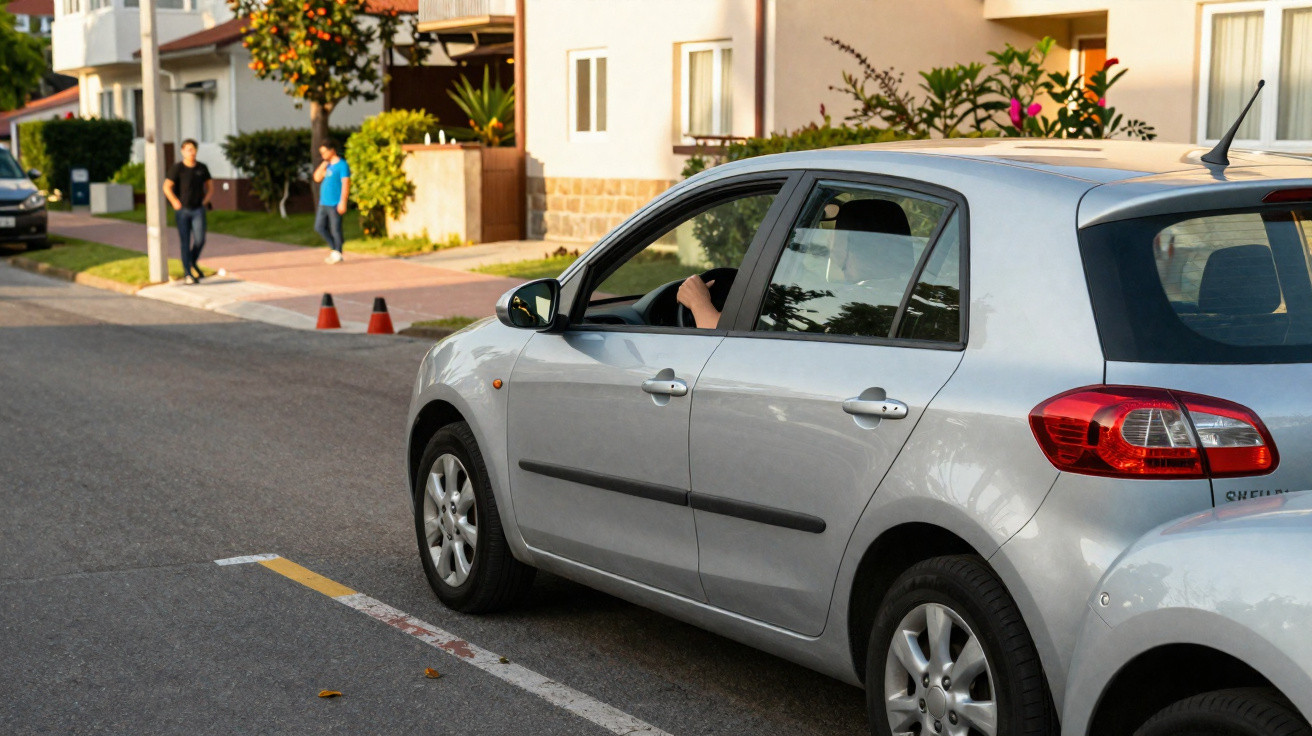
The traffic lights outside the supermarket had already turned green, yet the small grey hatchback ahead stayed put.
Through the rear window you could make out the driver’s right foot simply resting on the pedal - ankle slack, the car looking half-asleep. When it eventually edged forwards, there was a slight squeal you almost sensed rather than heard: a weary noise, like components that have reached their limit.
Most people behind the wheel rarely consider where their feet spend the journey. If the car goes, everything’s fine - or so it seems. But that little habit of leaving your foot “just there” can, over time, chew through parts you’d much rather not fund. A tiny comfort can turn into a chunky invoice - the sort that arrives without warning.
There’s one tell-tale area technicians spot immediately, and they can often infer your driving habits just by the evidence it leaves behind.
Where drivers rest their foot – and what it secretly destroys
Watch any busy junction for a few minutes and you’ll notice it everywhere: drivers keeping their right foot lightly against the brake pedal even when they aren’t meaning to brake. It feels reassuring - like they’re poised for anything. For the car, though, it’s a continual, hidden request to work.
That feather-light pressure - barely perceptible from the driver’s seat - is enough for the pads to keep kissing the discs, over and over. Not a proper bite; just a gentle, constant scrape. On a dry day you may not register anything at all. In wet weather, you might catch a faint hot, burnt smell near the wheels and wonder what’s causing it.
A mechanic in London once described a delivery driver who arrived insisting his “new van was cursed”. In under twelve months he’d burned through three sets of front pads. The van had covered under 40,000 km. No towing, no mountain driving - just city streets and endless pulling away and stopping.
They took him out for a drive to diagnose it. Within a couple of minutes the problem was obvious: his right foot lived permanently half on the brake, half poised for the accelerator. He believed he was being alert and cautious. In practice, the brake lights were fluttering like a Christmas tree and the pads were lightly scouring the discs the entire time.
When the wear marks were pointed out, he struggled to accept it. The outer edges of the pads were glazed and uneven, as though they’d been polished with sandpaper. Somebody worked out the numbers: three sets of pads and discs, versus a minor change in foot position. The room went silent.
Workshops see this pattern again and again. Lightly riding the brake doesn’t feel like braking, but the hydraulic system isn’t interested in feelings. Pressure is pressure. Even minimal contact between pad and disc generates heat - and heat is what steadily consumes friction material.
Over many thousands of kilometres, this habit can bring forward pad changes by years. Discs may warp or pick up grooves. Calipers end up doing extra duty, seals get cooked, and brake fluid effectively bakes. Drivers then report “spongy” or “grabby” brakes, unaware it began with nothing more than a comfortable place to rest a foot.
The brakes aren’t the only victims. The clutch takes a hit too: if you rest your foot on the clutch pedal, you keep the release bearing under constant load. It spins when it shouldn’t, the clutch never fully locks up, and friction builds. You pay twice - in performance and in repairs.
The simple foot habits that save your brakes, clutch and wallet
Most cars have a small piece of plastic or rubber that drivers barely notice: the dead pedal - the raised footrest to the left of the clutch. Whenever you’re not changing gear, that’s where your left foot should sit. Not hovering, not brushing the clutch, but planted on the footrest.
This keeps the clutch pedal completely released, lets the release bearing relax, and allows the clutch plates to stay fully engaged. Less slip means less heat and less wear. It also supports your body on longer journeys: your posture improves, your legs fatigue more slowly, and your inputs on the other pedals become smoother and more precise.
For your right foot, the guidance is even more straightforward. If you’re not slowing down, your foot should be properly on the accelerator or properly on the floor in front of the brake - not half-resting on the brake “just in case”. When you need to brake, brake decisively, then come off the pedal fully.
The most common slip-up looks harmless: creeping in heavy traffic at walking pace, you hover and gently stroke the brake rather than pressing and releasing. That leaves the pads in a half-engaged limbo, warming everything up for no good reason.
On the motorway, a different version appears. Some drivers keep cruise control on but rest a foot lightly on the brake “just in case”. The vehicle treats that as a genuine braking command: cruise disengages, pads can drag, fuel economy suffers, and your brake lights irritate everyone behind you.
On steep hills, it’s very tempting to hold the car on the brake at every stop. It feels controlled. Yet, particularly in automatics, it can be hard on both the brakes and the transmission. Using the handbrake or an auto-hold feature gives the system a chance to cool. Let’s be honest: hardly anyone does this perfectly every day. But when you remember, the benefits accumulate.
“When I see blue-tinted discs and pads worn to the metal at 30,000 miles, I don’t think bad luck. I think driver habit,” says Marc, a French mechanic who’s been in the trade for twenty years. “The car is just obeying what your foot is saying, even if you don’t realise you’re speaking.”
In a workshop in Lyon, there’s a handwritten checklist taped beside the coffee machine. It’s meant for customers rather than staff. The tone is blunt, yet oddly generous - like guidance from an older cousin who has destroyed a few cars and learned the expensive way.
- Rest your left foot on the dead pedal, not the clutch
- Keep your right foot fully off the brake unless you’re slowing down
- On hills, use handbrake or auto-hold at red lights
- Watch your brake lights in shop windows to spot if you’re riding the pedal
- If you smell burning near the wheels, change your feet before you change your pads
What your feet say about you on the road
On a calm evening, as you roll through town, use the rear glass of the car in front as a mirror. Catch your own brake lights reflected in shopfronts. Are they flickering in small, constant pulses, or only lighting when you truly slow down? That tiny pattern reveals how hard your car is being made to work without you noticing.
We often treat brakes and clutches as “the car’s problem” - hidden away under metal, oil and heat. In reality, the ongoing dialogue is between your shoes and those concealed components. Constant slight pressure leads to constant slight damage: no drama, just gradual erosion. You tend not to clock it until a mechanic calls you over with a serious expression.
And it isn’t only about the money. It’s about the strange comfort of habits. We place a foot wherever feels cosy or “ready”, never considering that one day someone will set your worn parts on a bench and read your driving style like a diary. On a hot afternoon, when the bill lands higher than you planned, that diary suddenly feels uncomfortably personal.
| Key point | Details | Why it matters to readers |
|---|---|---|
| Riding the brake pedal | Keeping your right foot resting lightly on the brake makes pads touch the discs constantly, creating heat and premature wear. | Means changing pads and discs far earlier than expected, with repair bills that can jump from €150 to €500+ on modern cars. |
| Resting on the clutch | Parking your left foot on the clutch pedal loads the release bearing and stops the clutch from fully engaging. | Shortens clutch life, which often costs €700–€1,500 to replace when labour and parts are included. |
| Using the dead pedal | Putting your left foot on the dead pedal supports your leg and keeps you from accidentally touching the clutch. | Reduces fatigue on long drives, improves control and quietly extends the life of expensive drivetrain parts. |
FAQ
- Is it really bad to rest my foot lightly on the brake? Yes. Even gentle pressure can keep the pads touching the discs, building heat and wear that you won’t notice until the components are already worn out.
- How do I know if I’m riding the brakes without realising it? Get someone to follow you and watch for brake lights, or use reflections in parked cars and shop windows. If your lights pulse often while your speed is steady, your foot is applying too much.
- Can this habit affect fuel consumption? Yes. Light, continuous braking turns energy into heat, so the engine must work harder to hold speed. Over time, that can add several extra litres of fuel on long journeys.
- Is using the dead pedal really that useful? Yes, particularly in manual cars. It supports your leg, helps prevent clutch riding, and gives you a steadier driving position, which also assists in emergency manoeuvres.
- What about automatics, can I still cause premature wear with my feet? Absolutely. Resting on the brake can overheat pads and discs, and using both feet (one on brake, one on accelerator) can strain the entire braking system.
- How long should brake pads last with good foot habits? It varies by car and driving conditions, but many everyday drivers get 40,000–80,000 km from a set of pads when they’re not riding the pedal.



Comments
No comments yet. Be the first to comment!
Leave a Comment