
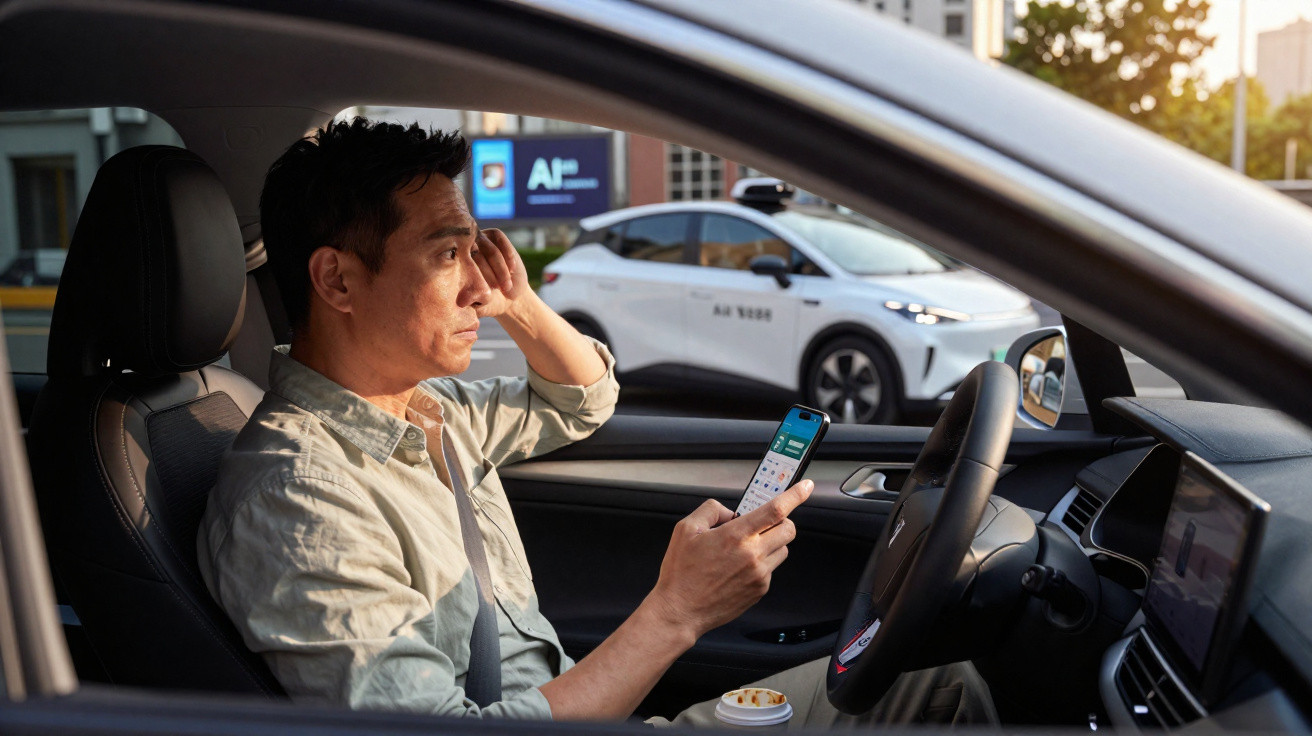
The driver’s phone glowed in the darkness, as it always did. Ping. Another trip. Saturday evening, city centre, surge pricing. He flicked his eyes to the display, grinned, and hit “accept” almost automatically.
Then something else popped up on the dashboard: an advert for a new app, offering passengers “cheaper than Uber” and drivers “AI-optimised earnings”. The grin slipped. He’d seen the chatter in WhatsApp groups. He’d read the threads on Reddit. A fresh platform was on the way. Fewer people. More code.
And somewhere at the back of his mind, he pictured the old yellow taxis at the rank, their drivers watching Uber cars slide by with that familiar mix of anger and disbelief.
It felt grimly like history repeating itself.
Only this time, he was the one in the crosshairs.
The new wave that’s coming for Uber drivers
If you scroll through driver forums in the small hours, you can feel it straight away. A steady, background hum of worry from the people who spend their days ferrying strangers across town.
Drivers who once called themselves “the future” are now quietly swapping predictions about a different future heading their way. Not just another app doing the same job. Something more impersonal and harder to see: autonomous fleets, robotaxis, and ride platforms that can operate with barely any humans - if any at all.
There’s a bitter twist to watching the disrupters start to feel disrupted. You can hear the same defensive humour, the same chest-thumping confidence taxi drivers had ten years ago. Beneath it all sits the same muted dread.
Look at San Francisco. Waymo vehicles, with nobody behind the wheel, now cruise up alongside Ubers at red lights.
One driver uploaded a picture of three robotaxis lined up and captioned it: “This is what it felt like to be a cabbie in 2014.” Another posted a screenshot: his weekly take, hammered by a surge of promotions from a new AI-led ride app.
In Phoenix, in parts of the city, people already summon a driverless car almost as casually as ordering takeaway. Kids shoot TikToks in the back of vehicles with no driver to talk to, no one to ask “Busy night?”. For them, it’s simply… ordinary.
The surprise mostly sits on the driver’s side of the windscreen.
The reasoning is painfully straightforward. Uber made getting around cheaper and more flexible by sidestepping the old taxi medallion set-up and leaning on technology plus independent drivers.
Now a new storyline is forming: remove the driver. No sick leave. No arguments over split fares. No stress when surge pricing evaporates.
To investors and city planners, autonomous fleets look like a tidy spreadsheet: predictable, scalable, efficient. To drivers, they feel like a gradual deletion. They can sense their livelihoods being decided in boardrooms they’ll never enter.
And, much like the traditional cabbies who once stood outside city halls with printed placards, Uber drivers are beginning to talk about strikes, petitions, and new unions. The wheel is turning again - only it’s spinning faster.
How drivers can fight back in a world of algorithms and robotaxis
Some Uber drivers have already chosen not to sit and wait for the next shock to hit. They see the app as a stage in life, not the end point.
The drivers who seem to rest a little easier are doing something unexpectedly practical: using Uber to pay for their way out. Not a dramatic, quit-tomorrow daydream. More a quiet, disciplined transition.
They log the hours that pay best, shave off a portion during the strongest weeks, and place it into something that isn’t tied to one platform: a small local business, specialised delivery work, private chauffeur services, niche shuttle routes, even creating content about life behind the wheel. It’s less shiny than the “be your own boss” slogans - and far more grounded.
Another set of drivers is leaning into a different approach: doubling down on what algorithms struggle to replicate. Human presence. Local familiarity. Emotional intelligence.
Some develop near “micro-brands” within the app. The car that always has water and phone chargers. The driver who knows every back route around the stadium on match nights. The one who recognises repeat passengers and asks how the job interview went.
In a spreadsheet, every driver looks identical. On a wet Tuesday after a dreadful day at work, that human touch can matter far more than people admit. Let’s be honest: nobody really keeps that up every single day. But the drivers who do it often enough leave an impression - and occasionally build a loyal group willing to follow them off-platform.
Here’s the understated truth you hear when drivers speak off the record: most never mapped out a future beyond the app. They arrived during the rush. Flexible hours, daily payouts, and no manager hovering over them.
Now another wave is rolling in, and the drivers who cope best are the ones who accept that Uber was always a tool - never a safety net.
“I used Uber to buy my freedom,” one London driver told me. “Not to rent it forever.”
Around that shift, the same practical steps keep resurfacing:
- Spread your risk across platforms rather than relying entirely on one app.
- Use peak-event know-how (concerts, airports, sport) to build private, off-app client lists.
- Convert repeat passengers into direct customers for airport runs or regular commuting.
- Put money into a skill that isn’t controlled by the same algorithm - from accounting to coding to car valeting.
- Speak to other drivers face to face, not only in furious online threads.
None of these are miracle fixes. They’re modest, human moves inside a system that can feel relentlessly automated. And they carry a quiet point: drivers are more than dots on a map.
What this shift says about all of us
When taxi drivers protested against Uber a few years ago, many of us just shrugged. Old model, new model. That’s progress, isn’t it?
Now Uber drivers are starting to sound eerily like those same cabbies. Unfair competition. A race to the bottom. Too much influence concentrated in one or two platforms.
On a slow night, trapped in traffic, some admit an awkward thought: if I applauded disruption then, do I really get to complain now? The question lingers somewhere between the front seats and the back.
The rise of autonomous cars and AI-led ride apps isn’t only a technology story. It’s a reflection. Each time we tap “order” and pick the cheapest, fastest, lowest-friction option, we quietly cast a vote for a world with fewer humans involved.
On a phone screen, that feels convenient. In day-to-day life, it gradually wears away the messy, imperfect - sometimes irritating - human layer that gives cities their character. On a rough day, a chatty driver can be the only real conversation a passenger has. Remove that, and something unseen goes missing, even if the car still arrives on time.
At a deeper level, the Uber–taxi–robotaxi story is simply a compressed version of what’s happening across dozens of jobs. Copywriters getting AI drafts. Cashiers replaced by self-checkouts. Customer support shifted to bots.
One wave pushes out another, and every newly threatened group says, “But this time, it’s different.” It usually isn’t.
The real question isn’t whether disruption will end. It’s how far we’re prepared to protect the people caught inside it - including the ones we only meet for 15 minutes, through a rear-view mirror. Next time your driver glances uneasily at an unfamiliar notification on their screen, you’ll have a clearer idea of what’s running through their mind.
| Key point | Detail | Why it matters to readers |
|---|---|---|
| The next wave after Uber | Autonomous fleets and AI-driven ride apps are pitching themselves as “cheaper, smarter Uber”. | Helps you anticipate how your rides - and the people who drive you - might change. |
| Driver strategies | Some drivers treat Uber as a stepping stone: saving, building private clients, or learning new skills. | Offers practical ideas if your own job sits in the path of automation. |
| Impact on society | Each tap on “cheapest, fastest” nudges the system towards fewer humans and more automation. | Encourages you to question daily choices and what work will look like in your city. |
FAQ:
- Who is “coming for” Uber drivers exactly? Mainly autonomous vehicle companies and newer ride platforms that use AI heavily to optimise pricing, routing, and fleet utilisation, with far fewer human drivers over the long term.
- Are robotaxis really a threat, or just hype? They’re currently limited to a handful of cities, but each successful pilot boosts investor confidence and pressures regulators to consider broader roll-outs.
- Will Uber itself replace its drivers with self-driving cars? Uber has already tested autonomous technology and is likely to partner with, or fold in, autonomous fleets wherever it makes financial sense.
- What can current drivers realistically do now? In the short term, they can spread work across apps, sharpen local know-how, and build direct relationships with clients; in the long term, they can treat driving as a funding bridge to another skill or business.
- As a rider, do my choices actually matter? Yes: where you spend affects whether platforms lean towards human-centred models or fully automated ones, particularly when you consistently favour or avoid certain options.

Comments
No comments yet. Be the first to comment!
Leave a Comment