
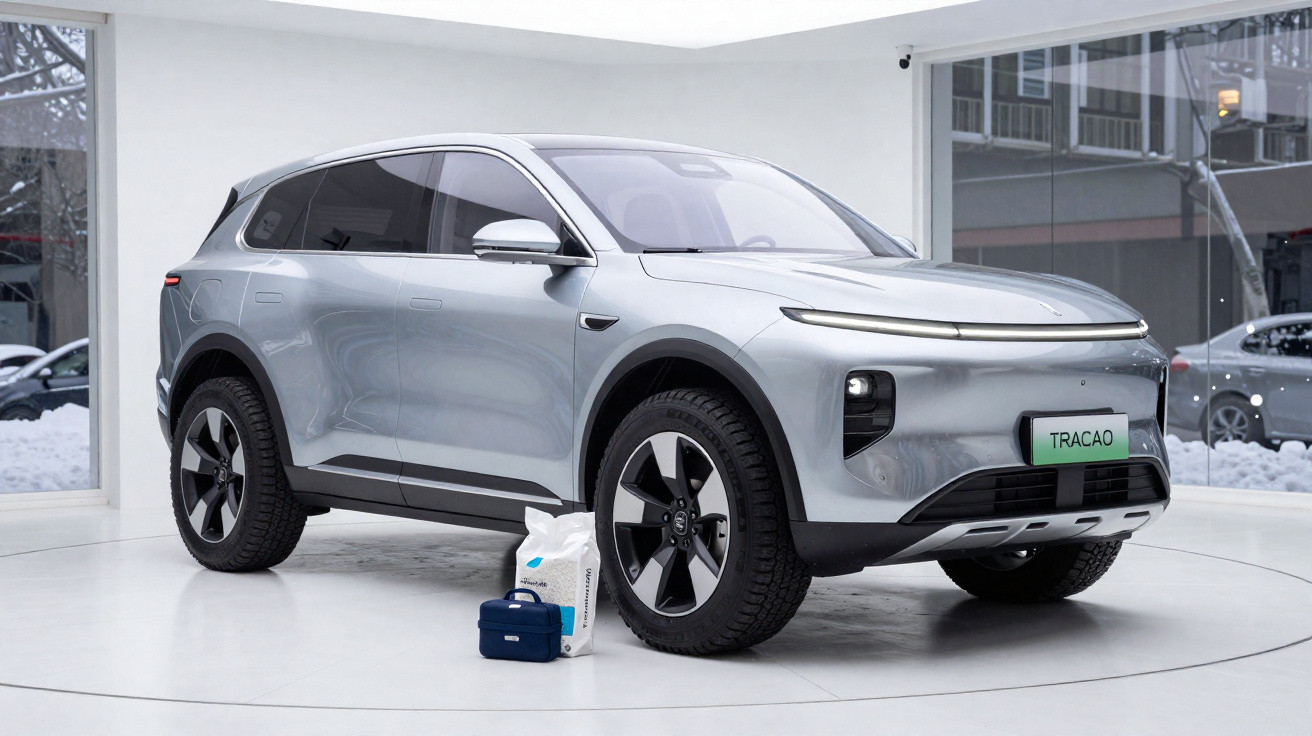
The first time my car slewed sideways on an icy side street, I wasn’t attempting anything flashy. No speeding, no handbrake turns - just inching up a small hill on a grey January morning. The tyres began to spin with that nasty, high-pitched whine and then… nothing. I ended up stranded right in the road, the wheels buffing the ice into a glossy mirror. A line of cars formed behind me, everyone doing their best to look unbothered. My hands were slick with sweat on the steering wheel.
An old estate car drew alongside. The driver opened his boot, walked over with a torn paper bag, and matter-of-factly tipped something around my tyres. “Try it now,” he said. I pressed the accelerator. The car bit. I eased forward as if someone had flipped a switch.
That’s when I discovered what a bag of kitty litter can do in winter.
Why a bag of kitty litter can save your winter commute
If you’ve ever lived somewhere that gets proper snow and ice, you’ll have heard plenty of handed-down “driver lore”: weight over the axle, cardboard under the wheels, a shovel that effectively lives in the boot from November to March. Yet the trick that keeps proving itself - quietly, every winter - is also the least glamorous: a cheap bag of kitty litter.
Not for your cat. For your tyres.
On those icy mornings when your wheels spin uselessly and the road feels like glass, that dusty, gritty stuff can be the difference between ringing for recovery and driving off as though nothing happened.
Imagine a residential car park at 7:30 a.m. after a night of freezing rain. People in work clothes attempting tense three-point turns. You hear engines rev, tyres squeal, and then that awkward moment when a car simply… won’t go. A young bloke in trainers is out behind his car trying to push, sliding more than the vehicle.
Then there’s the driver who steps out without fuss, opens the boot, and produces a half-used bag of kitty litter. They scatter a rough ring around the stuck tyres, throw a bit along the intended line of travel, climb back in, and pull away in one smooth, almost self-satisfied motion. It isn’t superior technique. It’s being ready.
At its simplest, kitty litter works because rubber and ice are a dreadful pairing. A tyre needs texture to grip; ice offers next to nothing. Clay-based litter adds thousands of tiny contact points between tyre and frozen surface - like instant sandpaper under the tread. The grains bite into the ice just enough.
Once the tyre can push against those grains, it can finally propel the car. It’s not as dramatic as snow chains or studded tyres, but for low-speed “I just need to get unstuck” moments, it’s close to ideal. And unlike rock salt, litter doesn’t vanish in seconds or chew up your drive.
How to use kitty litter for traction when you’re stuck
The approach is straightforward, and oddly satisfying when it works. Start by putting the car in park and getting out safely, making sure nobody is sliding towards you from behind. Take the bag of kitty litter from the boot and rip it open just enough to pour - there’s no need to empty it.
Scatter a generous strip directly in front of and behind the drive wheels. If you don’t know which wheels are driven, front-wheel drive is a safe assumption for most modern cars. Cover the point where the tyre meets the ice, then extend the gritty line in the direction you want to travel. In effect, you’re laying a short runway of grip.
Once it’s down, get back behind the wheel and be gentle. Use light pressure on the accelerator - no big wheelspin. If your car offers different drive modes, choose snow or eco so it doesn’t lurch. Let the tyres gradually bite into the strip you’ve just created.
This is where many people slip up. They panic, mash the accelerator, and polish the ice into something even slicker. Let’s be honest: nobody manages a calm, textbook response every single time. Still, if you remember one thing, make it this - slow is your friend when you’re trying to regain traction.
Ask anyone who’s done a few winters and you’ll hear the same lesson, told a dozen ways.
“I don’t even own a cat,” laughs Melissa, who commutes 40 minutes through lake-effect snow, “but there are two things that never leave my trunk from November to March: a snow brush and a bag of clumping litter. One gets me visibility, the other gets me moving.”
Along with that, putting together a basic winter boot kit makes the whole process easier - and far less stressful.
- Kitty litter (non-clumping, clay-based): Best for traction and simple clean-up on the road.
- A small collapsible shovel: Helps you clear packed snow away from the tyres before you pour.
- Old floor mats or cardboard: Can be used with litter to add extra grip under the tyres.
- Work gloves and a small torch: Because spreading litter with bare hands in the dark is miserable.
- A cheap tarp or bin bag: Something to kneel on if you have to reach under the car or work in slush.
Why this tiny habit feels like a superpower in bad weather
There’s a particular kind of calm that comes from knowing you’re not entirely at the weather’s mercy. When the forecast says “freezing drizzle” and you still need to get to work, do the school run, or head out for a night shift, small preparations matter more than grand speeches about careful driving. That forgotten-looking bag in the boot starts to feel like a private edge.
We all recognise that spike of adrenaline when the car doesn’t behave the way you expect on a slippery street. Having a practical, low-tech option means you can do something - rather than freezing in place and hoping a stranger sorts it out.
There’s a quietly communal side to it, too. The first time you step into a car park and share a scoop of kitty litter with someone whose wheels are spinning, you can see their shoulders drop in relief. You become the person they mention afterwards: “Some random driver came over with kitty litter and got me unstuck.”
It’s a tiny act, yet it cuts straight through the winter irritability that hangs in the air when roads turn nasty. One inexpensive bag - used perhaps twice a year - becomes a story people repeat. Not because you were a hero, but because you happened to be prepared when somebody else wasn’t.
You may never slide into a snowbank. You might live somewhere the ploughs are quick and the gritters never seem to stop. Even so, the climate is shifting, and odd, icy mornings are turning up in places that barely owned snow shovels a decade ago.
A bag of kitty litter in the boot won’t “solve” winter, and it won’t replace winter tyres or sensible driving. What it can do is narrow the gap between “I’m stuck and helpless” and “I’ve got one more thing to try.” For a few pounds and a sliver of boot space, that’s a trade a lot of drivers quietly swear by. Next time you pass the pet aisle in the supermarket, you may find yourself looking at those plain paper sacks a little differently.
| Key point | Detail | Value for the reader |
|---|---|---|
| Kitty litter boosts traction on ice | Clay grains create a rough surface between tyres and ice | Helps you get unstuck without recovery or pushing |
| Easy to use in emergencies | Sprinkle around drive wheels and along your path | Quick, low-effort fix when your car won’t move |
| Part of a simple winter boot kit | Combine with shovel, gloves, and mats or cardboard | Reduces stress and risk during unexpected winter slides |
FAQ:
- What kind of kitty litter works best for traction?
Go for basic, non-clumping, clay-based litter. The cheap stuff, often sold in paper bags, tends to grip better and doesn’t turn into sticky mud as quickly.- Can I use kitty litter instead of winter tyres?
No. Kitty litter is a backup for low-speed traction when you’re already stuck, not a replacement for proper winter tyres or safe driving.- Will kitty litter damage my car or drive?
Clay litter is generally gentle on tyres and tarmac. You might track a bit of dust, but in most cases it’s less corrosive than heavy road salt.- How much kitty litter should I keep in my boot?
A 5–9 kg bag is usually enough for several uses. You don’t need a huge tub; even a half-full bag can get you out of multiple icy patches.- Can I use sand or salt instead of kitty litter?
Sand works well too, but many people already have kitty litter at home, and it’s less messy to keep in the car. Salt melts ice, but on its own it doesn’t always add much grip.






Comments
No comments yet. Be the first to comment!
Leave a Comment