
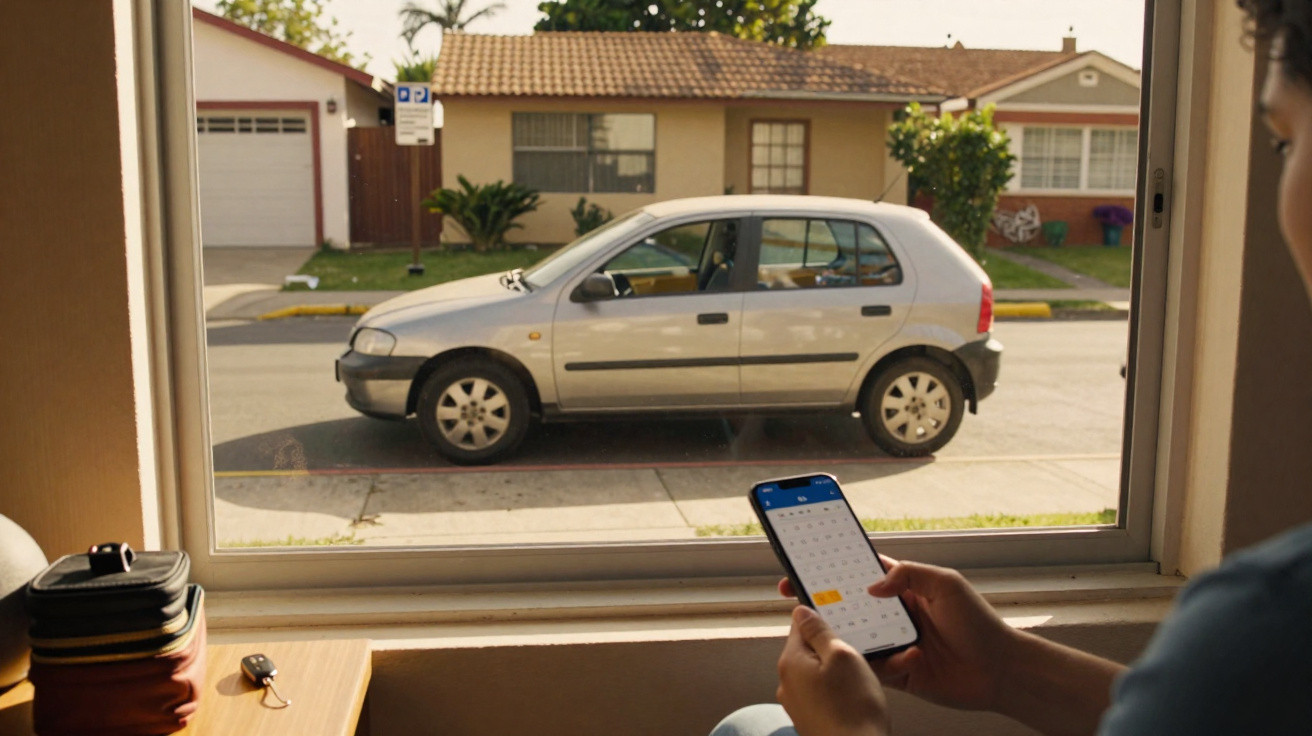
You start asking yourself whether it can even be lawful - and what, if anything, you’re allowed to do about it.
That uneasy sensation of a car sitting directly beneath your window can ramp up fast. Neighbours start talking, WhatsApp groups spring into life, and someone almost always brings up a shadowy “14-day rule”. What the law actually permits is more straightforward - and, for many people, more irritating - than they expect.
Who actually owns the space in front of your house?
The first uncomfortable reality is this: if it’s a public highway, you don’t “own” the bit of road outside your home - even if you pay council tax or you’ve parked there for 20 years. Public streets exist for everyone to use, including visitors, commuters, couriers and people coming in from other areas.
"In most European countries, a legally parked, roadworthy car can remain in the same public spot for a very long time if no local rule says otherwise."
A lot of disputes begin because residents feel they have a moral entitlement to “their” kerbside space. In legal terms, it’s usually treated differently. The deciding factor isn’t who lives closest, but which rules apply on that stretch of road: national traffic law plus any local parking restrictions.
The myth of the 14‑day rule
One of the most stubborn beliefs in Germany (and beyond) is that there’s a blanket “14-day rule” for cars. Under this urban myth, a vehicle must be moved every fortnight or the keeper faces a fine or towing. For ordinary passenger cars, road traffic law doesn’t back that up.
Germany’s road traffic rules (StVO) are fairly clear for standard vehicles: if parking is permitted and there’s no time limit, you can leave the car there indefinitely, provided it remains:
- correctly registered with valid number plates
- insured in line with local requirements
- roadworthy and safe (in Germany, that includes a valid TÜV inspection)
- capable of being moved at any time
The well-known 14-day figure appears in law for a completely different reason: it applies to trailers left without a towing vehicle, not to standard cars. That includes, for instance, a touring caravan left standing on the road by itself.
"The 14‑day limit targets detached trailers. A regular car, or a motorhome classified as a car, can normally stay indefinitely."
When the “two-year” clock quietly ticks
Lawyers sometimes quip that “unlimited” parking is, in reality, closer to a two‑year allowance. In many places, older vehicles must pass periodic inspections. In Germany, most cars are due for a technical inspection every two years. At that point the vehicle has to be driven to an approved centre. If the inspection expires, the car no longer qualifies as properly roadworthy and may become a target for enforcement.
So although no rule forces you to shuffle your car every few days, other obligations - inspections, vehicle tax and insurance - create practical limits on how long a car can sit untouched.
Parking in front of a driveway is a different story
The truly sensitive question often isn’t “outside my house”, but “across my drive”. That’s where many neighbourly rows move from annoyance into clearly defined legal territory.
Across Europe - including Germany and the UK - obstructing access to a driveway, garage, or an emergency route will almost always breach traffic rules. The precise wording differs by country, but the underlying principle is consistent: access to property (and passage for emergency services) takes precedence over someone else’s convenient place to park.
"Even on an otherwise legal parking strip, obstructing a driveway or garage entrance can lead to fines and, in many cases, towing."
In tightly packed residential streets, the line between “near the drive” and “blocking the drive” is a routine flashpoint. Enforcement officers generally focus on whether a vehicle:
- stops a car entering or leaving a driveway safely
- forces risky manoeuvres, such as reversing blindly into a busy road
- reduces visibility for pedestrians or cyclists, particularly near junctions
A handful of centimetres can determine legality, but officials often apply common sense: if a resident can’t use their driveway safely, the vehicle is typically treated as an obstruction.
Resident permits and time-limited zones
Up to this point, it can sound as though long-term on-street parking is widely tolerated. On the ground, it often feels far stricter. To manage packed kerbsides, councils and cities have expanded a patchwork of local restrictions, especially in busy areas and around transport hubs.
Common approaches include:
- resident-permit-only zones in dense neighbourhoods
- time-limited parking using a disc, often one or two hours
- pay-and-display machines in shopping areas
- mixed schemes where residents park free while visitors pay or face limits
If you’re hoping to “store” a car on the street for weeks, you need to read the signs with care. Leave a vehicle in a two-hour disc zone for days and it can rack up multiple tickets. In some places, repeated breaches lead to towing - particularly when roadworks or events bring in temporary parking bans.
"Local signs beat habits. If a street sign sets a time limit or requires a permit, your long‑term parking right shrinks very quickly."
What if you leave your car while travelling?
Many people only start thinking about these details when a big trip is coming up. You lock the front door, wheel your suitcase to the taxi, and assume your car will quietly sit on the kerb for three weeks.
In legal terms, if you’re in an unrestricted area, that’s usually acceptable. In practical terms, a few simple steps can lower the risk - for you and for your neighbours:
- tell a trusted neighbour or friend where the car is parked
- leave a key with someone local in case the vehicle needs moving
- avoid spaces close to junctions, building sites, or areas marked for upcoming works
- check the paperwork: inspection, vehicle tax and insurance should cover the entire period
Councils sometimes put up temporary “no waiting/no parking” notices for roadworks or removals. If nobody can relocate your car, it can be towed at your cost - even if it was lawfully parked at the time you left it.
Trailers, caravans and motorhomes: different rules on the kerb
The law draws a sharp line between an ordinary car, a trailer, and what counts as camping. This is where the 14‑day period actually comes into play.
| Type of vehicle | On-street parking rule (typical in Germany) |
|---|---|
| Ordinary car (PKW) | Unlimited parking where signs allow, if roadworthy and legal |
| Trailer without towing vehicle | Maximum 14 days in one spot, then must be moved |
| Caravan detached from car | Treated as a trailer, also subject to 14‑day limit |
| Motorhome classified as car | Can usually park like a normal car for an unlimited period |
There’s another important nuance: the rules talk about “parking”, not “camping”. A motorhome left on a public road can be entirely lawful so long as it behaves like a vehicle rather than a small holiday home.
"Sleeping overnight in a motorhome can be tolerated as “resting” for one night, but traditional camping with chairs, awning and barbecue belongs on official sites."
Why the law tolerates long-term parking
The notion of a “right to park” can feel strange. However, from a transport policy perspective, it reflects how car ownership works in practice. Millions depend on on-street parking because they don’t have a driveway or garage. If the law required every car to be moved every few days, enforcement would become far more expensive and many households would lose realistic access to a vehicle.
By permitting long stays, governments effectively accept that public streets also operate as storage for private vehicles. That choice has clear trade-offs: less room for cycle lanes or wider pavements, more pressure in high-density districts, and recurring friction between neighbours.
How to react when a strange car won’t move
A vehicle that hasn’t shifted for weeks - dust on the glass, inspection stickers long out of date - can quickly look suspicious. Before contacting the authorities, a few basic checks are useful:
- Look for valid registration or inspection stickers (where your country uses them).
- Check whether the vehicle is clearly blocking a driveway, fire hydrant or a pedestrian crossing.
- See if temporary signs were put up after the car was parked.
- Ask nearby residents whether they recognise the vehicle or know what’s going on.
If the car appears abandoned, isn’t properly registered, or plainly creates a safety risk, the council or police can look into it. They may attach a notice, allow a short grace period and, in some cases, arrange removal. But where the car is fully lawful and merely irritating, the law tends to favour the vehicle owner rather than the frustrated neighbour.
What this means for cities under pressure
With car ownership still high and urban space still tight, councils continue to tweak the rules. Resident schemes, car-club bays, e‑scooter corrals and cargo-bike stations all nibble away at the old “first come, first served” approach to kerbside parking. The underlying ability to leave a car for long periods remains, but the number of locations where it applies without conditions keeps shrinking.
That has real consequences for household finances. If a family is considering a second car, it’s not enough to compare fuel and insurance; there’s an obvious practical question too: where is this vehicle actually going to live? In many neighbourhoods, the hidden price of an extra car is paid in strained neighbourly relations and monthly permit charges, not only in running costs.
At the same time, people who genuinely need a car for shift work or caring responsibilities face a different problem: arriving home late and spending 30 minutes circling because other residents also benefit from that broad ability to park indefinitely. Arguments over kerbside space will intensify as towns and cities prioritise cycling, public transport and shared travel. The legal right to leave a vehicle for days outside somebody else’s home may persist; the number of places where it feels socially acceptable may not.






Comments
No comments yet. Be the first to comment!
Leave a Comment